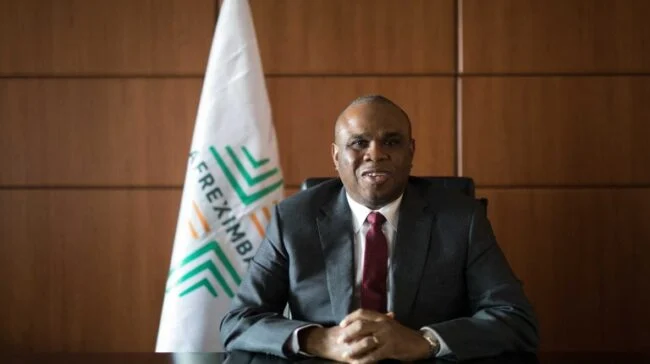
The Chairman of the African Export-Import Bank (Afreximbank), Benedict Oramah, has highlighted a critical issue facing Africa’s development: the continent has numerous bankable projects, but lacks the financial resources and infrastructure to implement them effectively. Speaking at a high-level forum, Oramah emphasized that Africa is not short of viable investment opportunities — including infrastructure, energy, healthcare, agriculture, and technology — but the absence of adequate funding mechanisms, weak local financial markets, and limited international investor confidence are major obstacles.
According to Oramah, one of the main reasons Africa struggles to attract sufficient investment is due to perceived risks rather than actual project viability. Many projects on the continent meet global standards for investment, but external investors often demand higher risk premiums due to misconceptions about political instability, governance, and economic volatility. This creates a cycle where even bankable projects remain underfunded or completely overlooked.
Afreximbank has been playing a central role in trying to close this gap. The bank has developed several initiatives to mobilize capital, such as the Pan-African Payment and Settlement System (PAPSS), which facilitates intra-African trade and reduces dependence on external currencies. By promoting trade within Africa, PAPSS also helps create more liquidity and strengthens regional economies. Afreximbank is also engaging in strategic partnerships to de-risk investments and attract private sector capital into large-scale infrastructure and industrialization projects.
Despite these efforts, Oramah pointed out that global financial systems are not structured to support African development adequately. Institutions like credit rating agencies often give African countries low ratings, which discourages foreign direct investment and increases borrowing costs. Additionally, the continent faces challenges such as limited access to long-term finance, high debt burdens, and weak institutional frameworks, which further hinder project execution.
To address this, Oramah called for a more united and self-reliant approach from African nations. He emphasized the need for countries to pool resources, strengthen regional cooperation, and support the growth of indigenous financial institutions. Encouraging domestic savings, expanding sovereign wealth funds, and leveraging diaspora remittances were also identified as potential sources of capital for African development.
Moreover, he urged international stakeholders to take a more realistic and constructive view of Africa’s potential, recognizing the continent’s youthful population, rich natural resources, and growing consumer markets. With proper financial engineering, technical support, and political will, many of the existing projects can become not only bankable but also transformative for Africa’s future.
While Africa has no shortage of viable development projects, a lack of accessible financing and systemic barriers continues to hold the continent back. Afreximbank and other stakeholders are working to change this narrative, but meaningful progress will require collaborative action from African governments, regional institutions, and international partners. The path forward involves building local capacity, reducing dependence on foreign capital, and rethinking how global finance engages with the African continent.
Leave a Reply