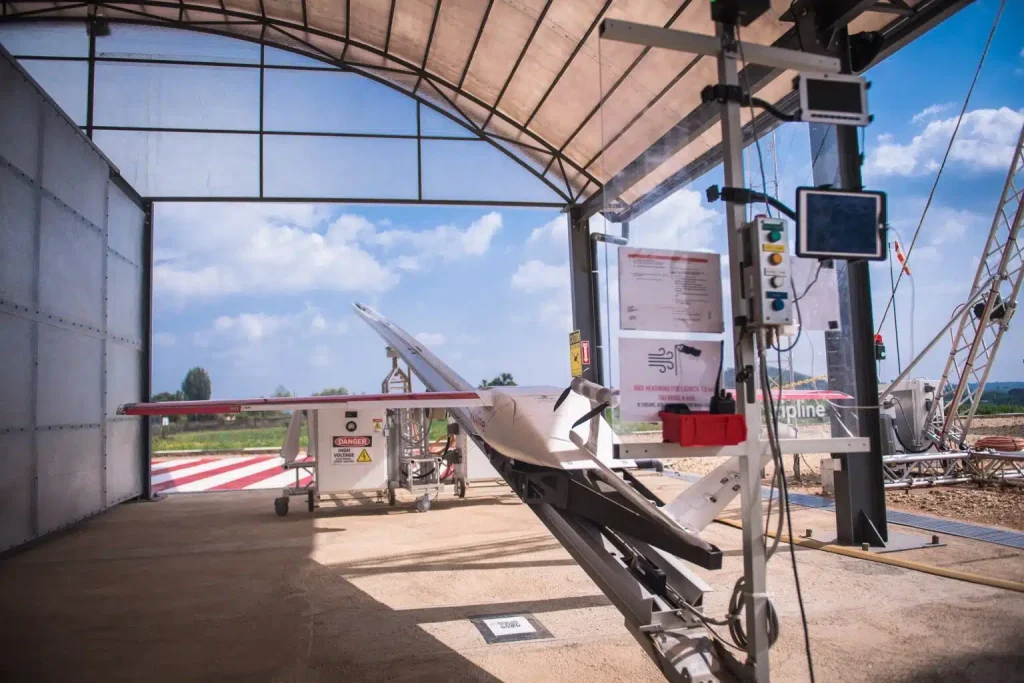
The United States government has approved a $150 million financing package to support Zipline, the global drone-delivery giant, as it accelerates its expansion across Africa. The funding—channeled through the U.S. International Development Finance Corporation (DFC)—marks one of the strongest endorsements yet of drone-powered logistics on the continent, where Zipline already operates some of the world’s most advanced autonomous delivery networks.
Zipline, known for its fixed-wing drones capable of long-distance, high-speed deliveries, has built a reputation for transforming medical logistics in hard-to-reach communities. The company currently operates in countries including Rwanda, Ghana, Nigeria, Kenya, Côte d’Ivoire, and Tanzania, where it delivers blood, vaccines, medicines, lab samples, and increasingly, consumer goods. With this new U.S. investment, Zipline plans to scale its technology, expand its service routes, and deepen partnerships across African health systems and private-sector supply chains.
According to the DFC, the funding is meant to strengthen essential services, improve last-mile delivery infrastructure, and foster technological innovation across emerging economies. By supporting Zipline, the U.S. aims to boost health equity and economic inclusion, particularly in rural areas where poor road networks often hinder access to timely care.
Zipline’s model has been widely praised for its efficiency and impact. In Rwanda, its operations have helped reduce maternal mortality by enabling rapid delivery of blood during emergencies. In Ghana, Zipline’s network supported nationwide COVID-19 vaccine distribution, becoming a global case study in leveraging drones for public-health logistics. Nigeria—one of Zipline’s fastest-growing markets—has integrated drone deliveries into routine immunization programs and primary healthcare supply chains across multiple states.
With the fresh $150 million injection, Zipline plans to roll out its next-generation electric drones, which offer improved precision for home deliveries and greater payload capacity for medical and commercial orders. The company also intends to expand partnerships in agriculture, e-commerce, and environmental monitoring, areas where drone logistics are gaining global traction.
The investment signals a growing recognition of drone technology as a critical tool for development. For African countries, Zipline’s expansion could mean faster emergency response, stronger healthcare systems, and the opening of new economic opportunities in remote communities. For the U.S., it reinforces a strategic commitment to supporting resilient, technology-driven infrastructure across the continent—setting the stage for a new era of autonomous delivery at scale.
Leave a Reply