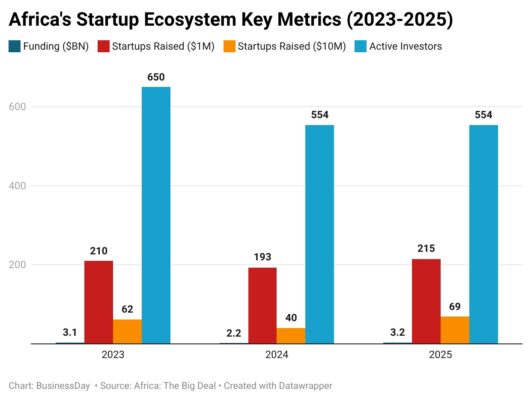
Africa’s tech ecosystem continues to capture global attention, with startups across fintech, healthtech, edtech, and agritech attracting increasing levels of investment. Despite economic uncertainties and a tighter funding environment compared to the boom years of 2021–2022, several key trends are emerging that investors, founders, and ecosystem stakeholders should watch closely in 2026.
1. Strategic Early-Stage Investments
While mega-rounds have slowed, there is a growing appetite for seed and Series A funding in startups with clear product-market fit and revenue traction. Investors are prioritizing disciplined capital allocation, favoring ventures with scalable models and strong unit economics. This trend is driving a more selective early-stage funding landscape, where quality deals are increasingly valued over quantity.
2. Rise of Sector-Specific Funds
Specialized funds targeting sectors like fintech, climate-tech, and healthtech are becoming more prominent. For example, fintech continues to dominate Africa’s investment landscape, particularly startups addressing financial inclusion, cross-border payments, and digital banking infrastructure. Similarly, climate-tech ventures focusing on renewable energy and sustainable agriculture are gaining traction as impact-driven capital flows into these areas.
3. Cross-Border and Diaspora Capital
African founders are increasingly tapping into international investors, including diaspora networks and global venture funds. These investors bring not just capital but market access, mentorship, and strategic partnerships. Cross-border investments are particularly strong in fintech and healthtech, where scalable solutions can impact multiple markets across the continent.
4. Alternative Funding Models
Beyond traditional venture capital, alternative models such as revenue-based financing, tokenized assets, and convertible notes are gaining ground. These instruments allow startups to access capital without immediate equity dilution, providing flexibility in uncertain markets. Crowdfunding and community-driven investments are also on the rise, especially for consumer-facing tech solutions.
5. Focus on Operational Efficiency
Investors are emphasizing capital efficiency and strong governance. Startups that can demonstrate clear growth metrics, disciplined burn rates, and transparent reporting are better positioned to secure funding, even in a more cautious environment.
As Africa’s tech ecosystem matures, these funding trends reflect a shift toward sustainable growth and strategic investment. While the hype of high-valuation deals has moderated, the underlying innovation continues to attract capital that is smarter, more targeted, and better aligned with long-term impact. For founders and investors alike, understanding these dynamics is key to navigating the continent’s evolving venture landscape.
Africa’s tech story is no longer just about rapid growth—it’s about building resilient, scalable, and investment-ready startups that can thrive in both local and global markets.
Leave a Reply