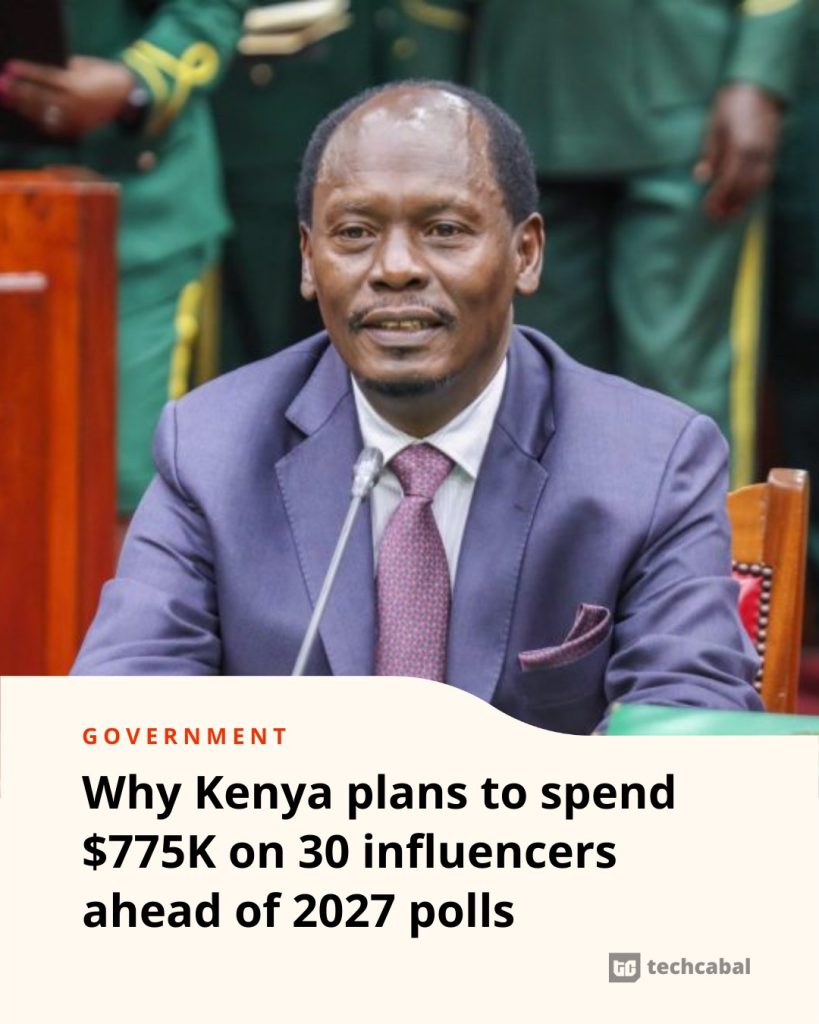
In a move that has stirred both debate and scrutiny across Kenya’s digital and political landscape, the government is proposing to allocate roughly Sh100 million (about USD 775,000) annually to hire social media influencers to amplify official messaging and shape public discourse online. The initiative, outlined in the National Communication Strategy drafted by the Ministry of Information, Communication and the Digital Economy, aims to formalise the use of digital creators in public engagement at a scale unseen in recent years.
At its core, the strategy represents a strategic pivot by state actors toward the burgeoning digital and creator economy, recognising that platforms like Instagram, TikTok, Twitter/X, and YouTube now reach a significant share of Kenya’s population. With research showing that a sizeable portion of Kenyans spend several hours daily on social media platforms, this shift is not surprising from a tactical standpoint; these mediums have effectively become central forums for news, debate, and public sentiment.
However, critics argue that the plan blurs the line between public information and propaganda. While officials frame the strategy as a tool to counter misinformation and improve the clarity and reach of government initiatives, sceptics including voices on social media, see it as an attempt to engineer narrative control and prioritise image management over pressing social needs like healthcare and education. The backlash reflects broader anxieties about how governments engage with digital ecosystems, especially as online influence increasingly drives public opinion and political visibility.
The mechanics of the proposal involve contracting a mix of macro-influencers creators with follower counts in the six figures alongside micro-influencers with smaller but highly engaged audiences. These influencers would be expected to craft content aligned with official priorities, promote specific hashtags, and amplify messaging across communities that are otherwise difficult to reach through traditional media channels. The Ministry also plans to invest in tools, training, and engagement forums to support this ecosystem.
Ultimately, this bold spend marks a new chapter in how digital communication intersects with governance. As Kenya seeks to harness the power of online platforms to engage citizens, the debate unfolding around this budget allocation raises fundamental questions about information integrity, public discourse, and the role of social media in democratic societies. Whether this strategy will achieve its stated goals or deepen suspicion about state influence in digital spaces remains to be seen, but the conversation it has ignited underscores the stakes involved when government and the creator economy converge.
Leave a Reply