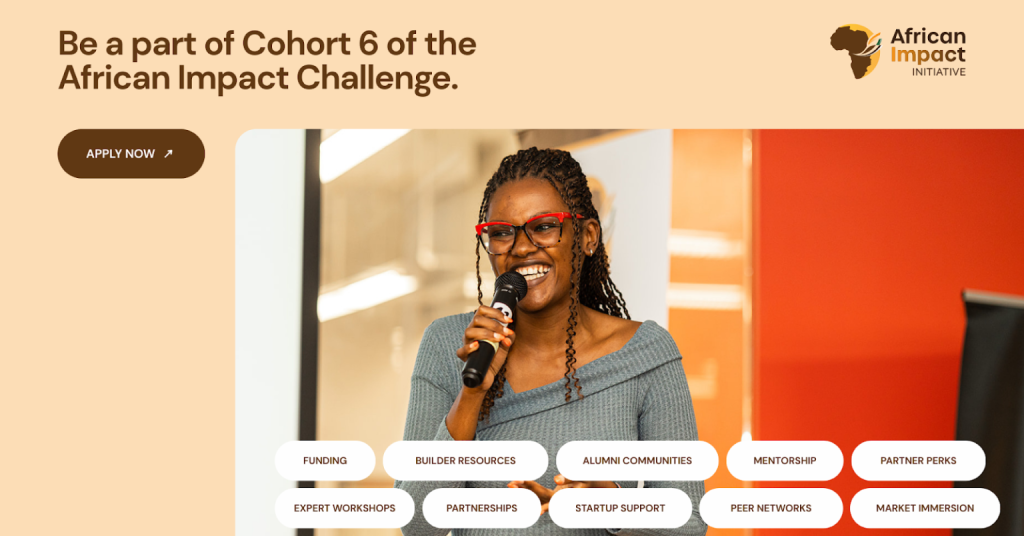
Applications are now open for the 6th cohort of the African Impact Challenge (AIC), a leading accelerator designed to empower African founders building scalable solutions to pressing challenges on the continent and beyond. This year’s call for applications comes with up to $25,000 CAD in funding available for selected ventures, alongside mentorship, market access, and a global support network to help early-stage innovators grow and thrive.
The African Impact Challenge is part of the African Impact Initiative, backed by partners like the Africa Health Collaborative, the Mastercard Foundation, and the University of Toronto. It aims to accelerate impact-driven enterprises that leverage technology to solve real problems in sectors such as health, climate, education, and economic inclusion. To date, the program has provided over $6 million in direct support, trained more than 7,000 founders across 46 African countries, and funded over 100 companies, many of which have gone on to secure significant follow-on investment.
The 2026 cohort is structured into multiple tracks tailored to the stage of the venture—from early ideas with validated problems to businesses with established revenue and traction. These include Explorer, Builder, Momentum, and Scale tracks, each offering different levels of funding and bespoke support to help teams hit their next milestones.
Founders joining the program don’t just gain capital; they also benefit from immersive training, tailored mentoring, and opportunities to connect with investors and partners around the world. The initiative also offers funded international exposure and post-programme support to help ventures secure further investment and expand into new markets.
Eligibility for this year’s cohort generally targets young African innovators under 39, committed to full-time venture development and building impactful, tech-enabled solutions. Applications are open until January 31, 2026, giving founders across the continent a window to apply and join a growing ecosystem of changemakers shaping Africa’s future.
Leave a Reply