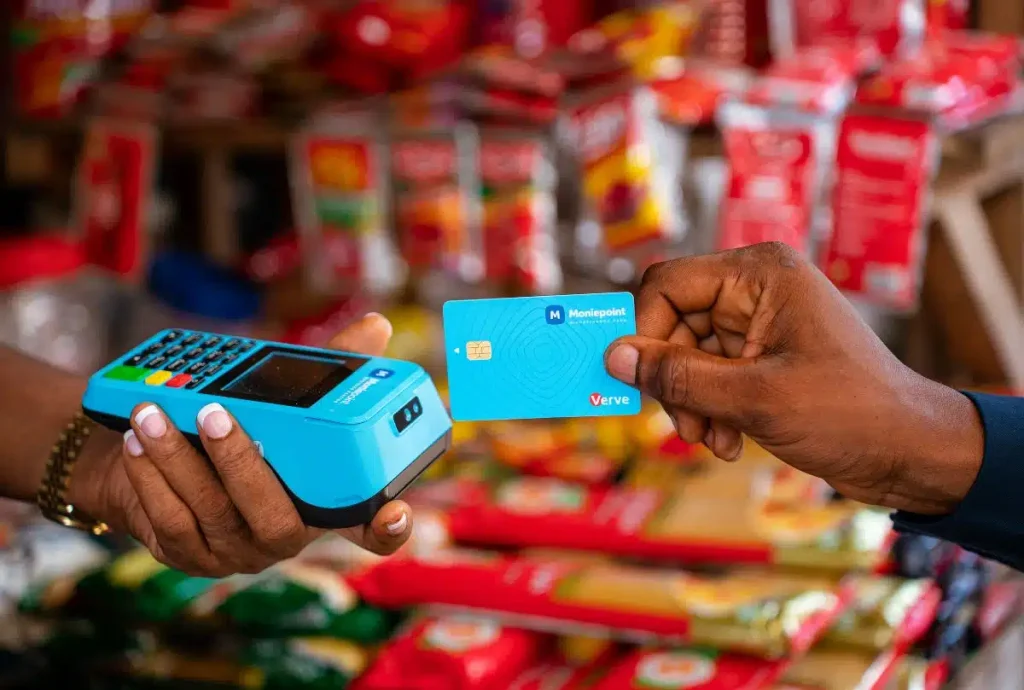
Moniepoint handled an estimated 80% of Nigeria’s in-person payments in 2025, cementing its position as the country’s most dominant payments infrastructure provider and one of Africa’s most influential fintechs.
The figure reflects Moniepoint’s deep penetration into Nigeria’s offline economy—markets, neighborhood stores, transport hubs, pharmacies, fuel stations, and thousands of small and medium-sized businesses that rely on point-of-sale (POS) terminals to accept card and bank transfers. With hundreds of thousands of active POS devices nationwide, Moniepoint has quietly become the backbone of everyday commerce, especially outside formal retail chains.
Nigeria’s cash-light transition has been uneven. While mobile banking and online payments have grown rapidly in urban centers, in-person payments still dominate daily transactions for millions of Nigerians. Moniepoint’s strategy focused squarely on this reality. Instead of chasing consumer apps alone, the company built reliable merchant infrastructure—fast settlement times, minimal downtime, and responsive agent support—earning trust in an environment where failed transactions can cripple small businesses.
By 2025, Moniepoint’s network processed trillions of naira monthly, benefiting from the Central Bank of Nigeria’s cashless policies and recurring cash shortages that pushed more merchants toward digital payments. Its POS terminals became especially critical during periods of naira redesign and liquidity constraints, when physical cash was scarce but economic activity had to continue.
Beyond payments, Moniepoint expanded into business banking services, offering merchants access to working capital loans, expense management tools, and business accounts. This ecosystem approach increased stickiness, making Moniepoint not just a payment processor but a financial operating system for SMEs. The company’s data advantage—derived from millions of daily transactions—also improved credit underwriting, allowing faster and more accurate loan decisions.
The scale of Moniepoint’s in-person payments dominance has broader implications for Nigeria’s fintech landscape. It highlights the enduring importance of offline commerce in Africa’s largest economy and underscores how infrastructure-first fintechs can achieve outsized impact. While global attention often focuses on flashy consumer apps or crypto innovations, Moniepoint’s rise shows that solving foundational problems—reliable payments, trust, and distribution—can unlock massive value.
As Nigeria’s economy continues to digitize, Moniepoint’s 2025 milestone positions it as a central player in shaping how money moves across the country’s streets, shops, and marketplaces for years to come.
Leave a Reply