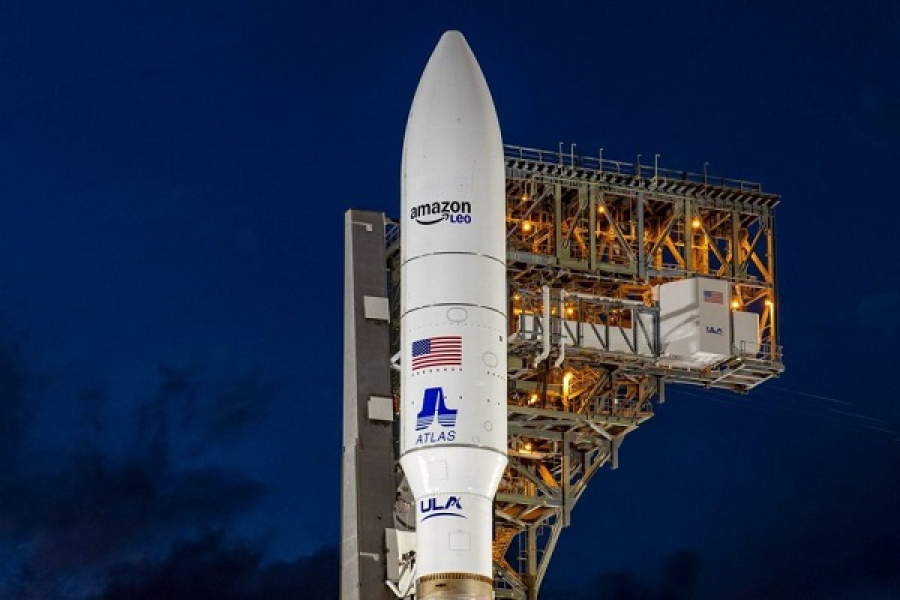
Amazon’s plans to roll out satellite internet services in Nigeria are gaining attention, but their success depends heavily on securing two key regulatory approvals. Through Project Kuiper, its low-Earth orbit (LEO) satellite broadband initiative, Amazon hopes to tap into Nigeria’s vast market of underserved and unconnected communities. However, without the right licences, those ambitions could remain grounded.
At the centre of the plan are two critical approvals from Nigerian regulators. The first is a satellite landing rights licence from the Nigerian Communications Commission (NCC), which allows foreign satellite operators to provide connectivity services within the country. This licence is essential for Project Kuiper to legally beam internet services into Nigeria and partner with local operators.
The second requirement is spectrum authorisation, coordinated with the NCC and the National Frequency Management Council (NFMC). Although satellite internet relies on space-based infrastructure, it still uses radio frequencies that must be allocated and managed locally to avoid interference with existing services. Securing this approval ensures that Amazon’s satellites can operate without disrupting Nigeria’s telecom networks or other satellite providers.
Nigeria represents a strategically important market for Amazon. With over 220 million people and broadband penetration still below government targets, satellite internet offers a potential solution for reaching rural and hard-to-connect areas where fibre and mobile networks are costly to deploy. Project Kuiper could complement existing infrastructure by providing backhaul to telecom towers and direct-to-user broadband in remote regions.
Competition is already intensifying. Starlink, operated by SpaceX, entered Nigeria in 2023 and has expanded rapidly, becoming the first LEO satellite provider licensed in the country. Its early entry has set benchmarks for pricing, performance, and regulatory compliance. For Amazon, catching up will require not just regulatory approvals, but also competitive pricing, local partnerships, and reliable customer support.
Regulators, for their part, are walking a fine line. While Nigeria is eager to attract investment and accelerate broadband access, authorities must also ensure fair competition, national security, and effective spectrum management. Licensing decisions will shape how satellite internet integrates into the broader telecom ecosystem.
Ultimately, Amazon’s satellite internet ambitions in Nigeria rest less on technology and more on regulation. If the necessary licences are secured, Project Kuiper could play a meaningful role in closing Nigeria’s digital divide. If not, Africa’s largest economy may remain a missed opportunity in Amazon’s global connectivity push.
Leave a Reply