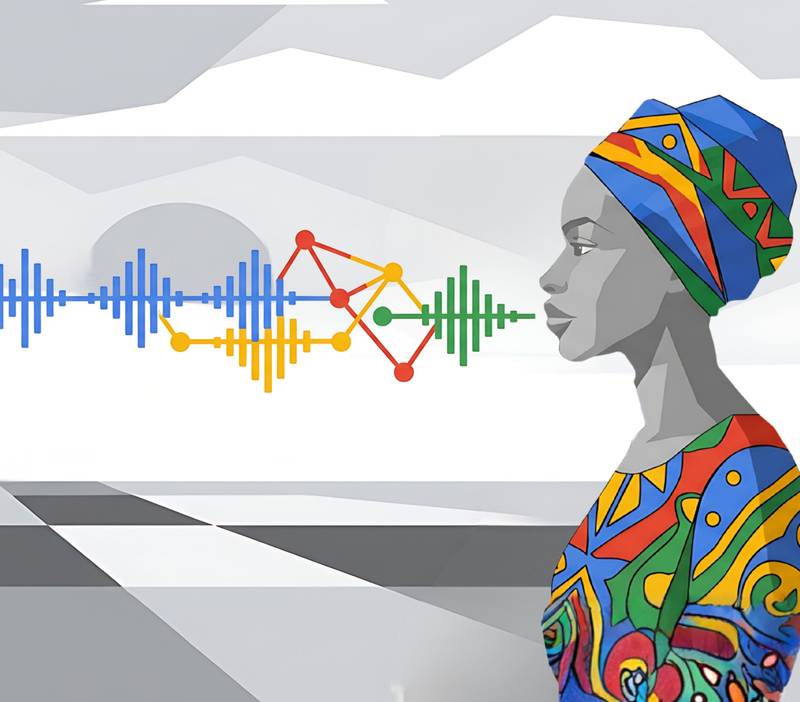
In early February 2026, Google Research Africa, working with several African universities and community organisations, unveiled WAXAL, an open speech dataset built to tackle one of African tech’s most stubborn problems: language exclusion in artificial intelligence. Named after the Wolof word for “speak”, WAXAL brings together more than 1,250 hours of transcribed speech and studio recordings across 21 African languages, making it one of the most ambitious language data projects focused on the continent so far.
The cause behind WAXAL is not hard to trace. Despite Africa’s linguistic diversity, most speech-enabled technologies still work best in English and a handful of global languages. This gap has limited the usefulness of voice assistants, speech-to-text tools, and automated call centres for millions of people whose primary languages are African. Without quality datasets, developers simply could not train systems that understand how Africans actually speak.
WAXAL is designed to change that equation. The dataset was developed over about three years, with Google providing funding and technical support, while African partners led data collection on the ground. Universities such as Makerere University in Uganda and the University of Ghana, alongside local organisations in countries like Rwanda, played central roles. Notably, these institutions retain ownership of the data they collected, a detail that signals a shift from extractive research models to more balanced collaboration.
The immediate effect of this launch is access. By making high-quality speech data openly available, WAXAL lowers the barrier for African researchers, startups, and developers to build voice-based products in local languages. That could mean education apps that teach children in their mother tongue, health hotlines that speak to patients in familiar languages, or customer service tools that no longer force users to switch to English to be understood.
Funding, however, remains a critical undercurrent. While Google’s backing made WAXAL possible, it also raises familiar questions about scale and control. Open datasets often end up powering products built by companies with the deepest pockets and fastest infrastructure. Will African startups be able to turn WAXAL into viable businesses, or will global firms extract the most value from it? And will governments and local investors step in to fund the next layer of applications built on top of this data?
WAXAL arrives at a moment when Africa is pushing to define its place in the global AI economy, not just as a market but as a contributor. The dataset could help preserve languages, strengthen AI research in African universities, and shape digital tools that feel local rather than imported. But its long-term impact will depend on what happens after the launch buzz fades.
The real question now is whether WAXAL becomes the foundation for a thriving ecosystem of African-language AI products, or whether it simply feeds into a global AI pipeline that Africans still do not fully control.
Leave a Reply