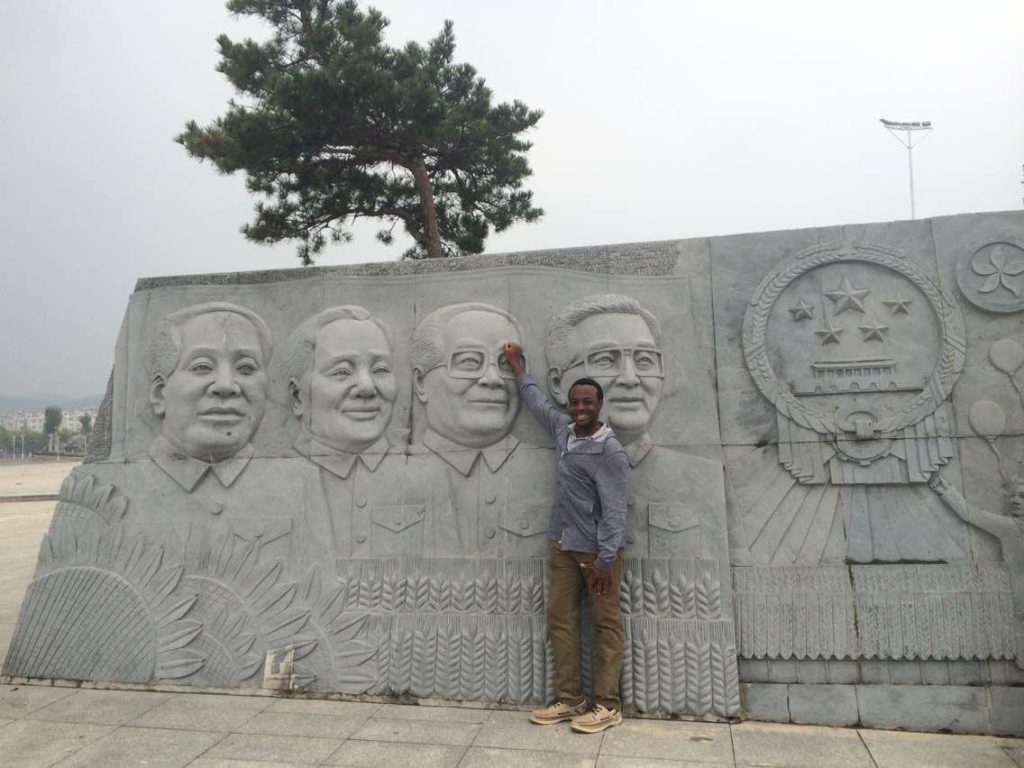
When Kevin Mwangi left Kenya for China in 2016, he wasn’t chasing the digital nomad dream. He was chasing engineering excellence. Awarded a scholarship to study electrical and automotive systems in Hangzhou, Mwangi immersed himself in the world’s most advanced electric mobility ecosystem — from battery labs to sprawling EV assembly lines.
Nearly a decade later, he’s back in Nairobi — not as a job seeker, but as a builder.
China’s dominance in electric vehicles is no accident. Companies like BYD and NIO have refined battery management systems, optimized supply chains, and driven down manufacturing costs at a scale unmatched globally.
For Mwangi, exposure to that ecosystem was transformative. “I saw how fast innovation can move when policy, capital, and engineering align,” he says.
But it was in Kenya’s chaotic traffic and rising fuel costs that he saw opportunity.
Back home, Mwangi founded an EV systems startup focused not on building entire vehicles, but on designing modular battery management and retrofitting kits for buses and delivery fleets. Rather than competing with imported finished EVs, his company works with local transport operators to convert existing diesel vehicles into electric ones — cutting emissions while extending asset life.
Kenya’s push for clean mobility, coupled with its high mobile money penetration and strong renewable energy mix, makes it fertile ground. With geothermal and wind power supplying a growing share of electricity, electrifying transport can meaningfully reduce urban pollution without simply shifting emissions upstream. Mwangi represents a new kind of digital nomad: not location-independent freelancers, but globally trained technologists returning home with specialized skills. China gave him technical depth — hands-on experience with battery chemistry, embedded systems, and EV diagnostics. Kenya gives him market urgency and entrepreneurial space.
The road isn’t smooth. Import duties on components, inconsistent charging infrastructure, and limited early-stage capital all present obstacles. Yet Mwangi believes localized engineering is the key. “We can’t copy-paste solutions,” he says. “Our grids, roads, and consumer economics are different.” As Africa’s cities grapple with congestion and climate pressure, builders like Mwangi embody a quiet but powerful trend: global learning, local execution. The training may happen abroad, but the systems — and impact are being built at home.
Leave a Reply