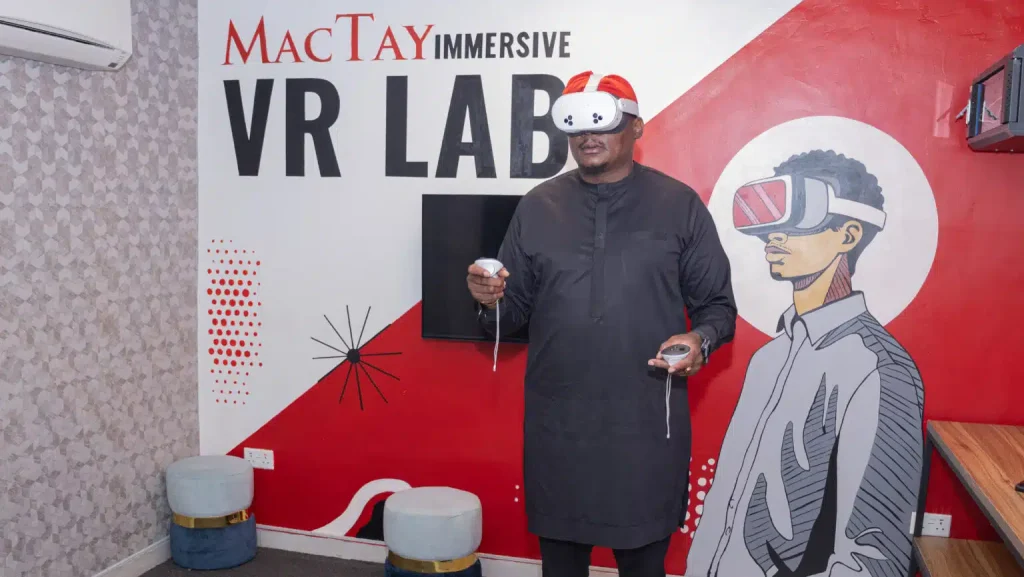
MacTay, a long-established Nigerian human resources and workforce development company, is transforming emergency response training in Lagos through the use of virtual reality (VR) technology. By combining immersive simulation tools with real-world emergency scenarios, the firm is helping first responders build practical skills in a safer, more scalable way.
The initiative places trainees inside highly realistic digital environments that replicate some of Lagos’s most challenging emergency situations. One of the most notable simulations is set on the Lekki-Ikoyi Link Bridge, where participants are trained to respond to road accidents, assess victims, and coordinate emergency care in real time. Instead of reading about procedures in a classroom, professionals are fully immersed in the experience using VR headsets and controllers that replicate real-life decision-making pressures. According to MacTay’s innovation team, the key advantage of VR training is the ability to repeat high-risk scenarios without exposing anyone to real danger. This allows emergency personn
el to practice complex operations such as first aid, patient assessment, and evacuation multiple times until they achieve mastery. The company emphasizes that many emergency situations are difficult, expensive, or unsafe to recreate physically, making VR a practical alternative.
The program has already trained more than 300 emergency services professionals in Lagos, including responders from agencies such as the Lagos State Ambulance Service (LASAMBUS). These trainees engage in interactive exercises where they check vital signs, make rapid decisions, and work as a coordinated team while receiving real-time guidance from the system.
MacTay developed the VR platform under its broader “Better Lagos Initiative,” which focuses on using technology to solve public sector challenges in cost-effective ways. The same immersive learning tools were initially designed for education but were later adapted for emergency response training after discussions with government health authorities. The company says the goal is not only to improve individual performance but also to build muscle memory and confidence in high-pressure situations. By simulating emergencies repeatedly, trainees are better prepared to respond effectively when real incidents occur.
Beyond emergency services, MacTay is also exploring wider applications of VR in education and workforce development across Lagos. If scaled successfully, the model could reshape how critical skills are taught across Nigeria, making training more accessible, standardized, and impactful.
Leave a Reply