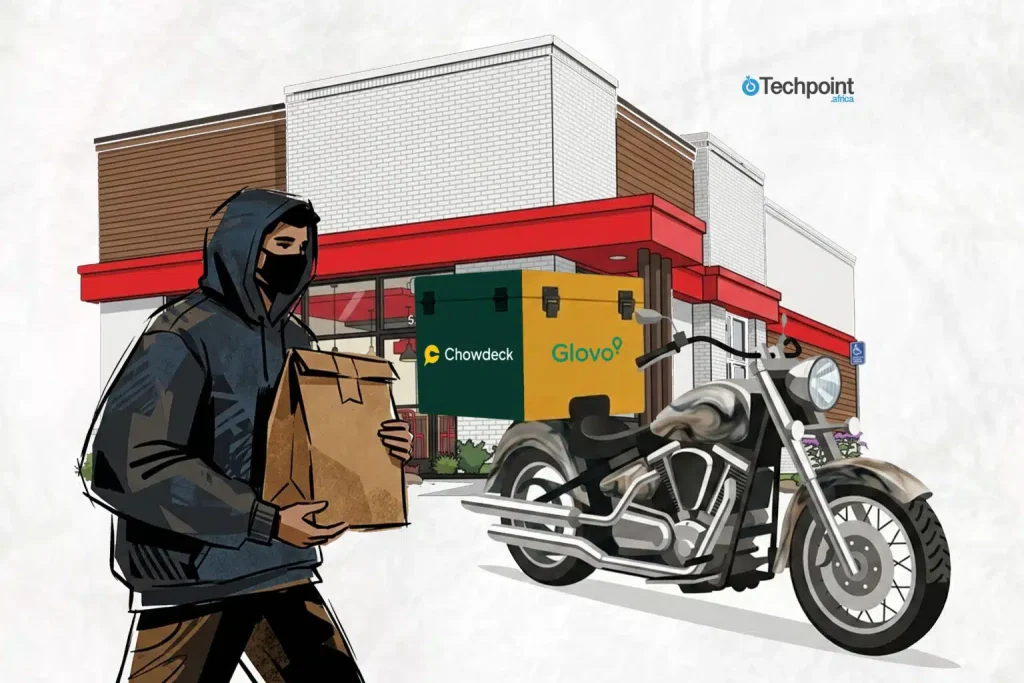
A recent investigation by Techpoint Africa has exposed major weaknesses in the vendor verification systems of food delivery platforms Glovo and Chowdeck after reporters successfully impersonated a restaurant and completed food deliveries without detection. The investigation has sparked concerns about consumer safety, platform accountability, and the growing risks of digital impersonation in Nigeria’s food delivery sector.
According to the report, journalists created fake restaurant profiles using fabricated tax identification numbers, false addresses, and food images copied from a legitimate Lagos-based restaurant that was not registered on either platform. Despite the false information, both platforms approved the fake listings and allowed the operators to begin selling food to customers.
The investigation was reportedly inspired by complaints from Lagos food brand Corporate Ewa, whose owner had earlier accused Glovo of allowing unauthorised vendors to use the restaurant’s identity and images on the app. Customers allegedly blamed the restaurant for poor-quality meals ordered through fake listings, even though the business had never partnered with the platform.
For Glovo, the investigators said registration required only basic details such as a business name, address, tax ID, and banking information. A fabricated tax number reportedly passed through the system without verification. After uploading stolen menu photos and paying a ₦20,000 activation fee, the fake restaurant received onboarding approval, signed partnership agreements, and even a device used for order management. Within days, the restaurant profile was active on the platform and able to process deliveries.
Chowdeck’s onboarding process initially flagged inconsistencies between the submitted business name and registration documents. However, the platform still allowed the fake business to operate under restricted conditions while verification remained incomplete. Investigators successfully uploaded stolen food images, listed products, and completed customer orders shortly after registration.
In response to the findings, Chowdeck stated that it uses third-party verification systems and applies tighter controls to businesses without complete registration documents. The company described such cases as limited exceptions intended for small businesses still formalising their operations. Glovo declined to comment publicly on the investigation.
The revelations have raised broader concerns about regulation within Nigeria’s food delivery industry. Unlike the fintech sector, which is subject to strict Know Your Customer and Know Your Business rules, food delivery platforms currently operate with limited sector-specific oversight. Experts warn that weak verification systems could expose consumers to fraud, unsafe food handling, and reputational damage for legitimate businesses.
The investigation has renewed calls for stronger collaboration between regulators such as the Federal Competition and Consumer Protection Commission and National Agency for Food and Drug Administration and Control to improve oversight and establish stricter vendor verification standards for digital food marketplaces in Nigeria.
Leave a Reply