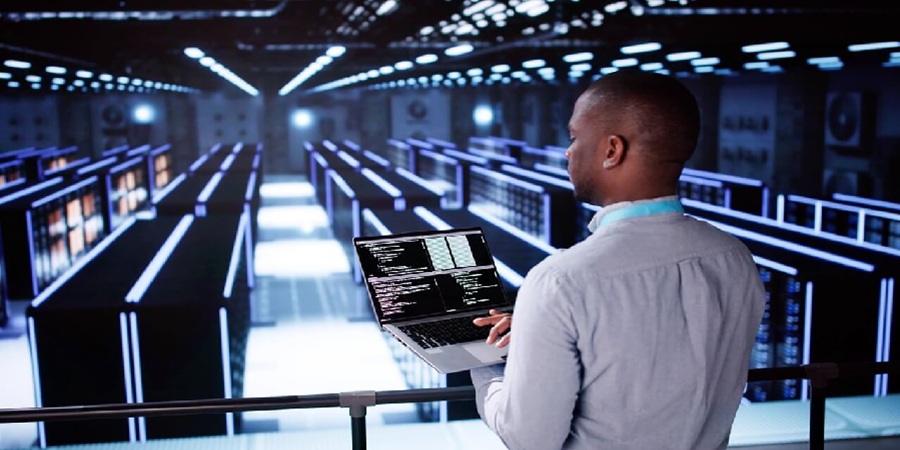
Nigeria is making another push to strengthen the digital infrastructure needed for artificial intelligence and cloud computing. This week, the National Information Technology Development Agency (NITDA) announced a strategic partnership with the International Data Center Authority (IDCA) aimed at improving Nigeria’s data centre ecosystem and supporting the country’s broader AI ambitions. The agreement is part of a wider effort to position Nigeria as a stronger player in Africa’s digital economy at a time when demand for cloud services, AI tools, and local data hosting continues to grow.
The partnership comes as governments and tech companies across Africa increasingly focus on “digital sovereignty” — the idea that countries should host and manage more of their data locally rather than depending heavily on foreign infrastructure. Nigeria already has a growing technology market, but limited local computing capacity remains a challenge for AI startups, fintech companies, cloud providers, and research institutions. NITDA has spent the last few years building policies and programmes around digital innovation, AI research, and cloud infrastructure through initiatives linked to its National Centre for Artificial Intelligence and Robotics (NCAIR).
According to reports on the new agreement, NITDA and IDCA plan to work with local and international ecosystem players on a large-scale digital infrastructure programme designed to improve Nigeria’s competitiveness and resilience in the global digital economy. While full technical details and timelines have not yet been publicly released, the collaboration appears focused on improving standards, attracting investment, expanding data centre capacity, and supporting AI-ready infrastructure. The announcement also builds on earlier discussions involving NITDA, IDCA, and other international partners around data sovereignty, cloud systems, and local digital capacity development.
For startups and technology businesses in Nigeria, the long-term impact could be significant if the plans move beyond announcements into execution. AI systems require large amounts of computing power, storage, and stable infrastructure, all of which depend heavily on modern data centres. Better local infrastructure could reduce latency, improve reliability for Nigerian businesses, and lower dependence on overseas hosting providers. It could also help sectors like fintech, e-commerce, health tech, and digital public services that increasingly rely on cloud computing and AI-driven systems. At the same time, infrastructure expansion raises questions around electricity supply, operating costs, sustainability, and whether local businesses will genuinely benefit from the investment wave.
What makes this development important is not just the partnership itself, but what it signals about Nigeria’s direction. Around the world, countries are racing to secure AI infrastructure because AI leadership is no longer only about software talent — it is also about access to computing power and secure data systems. Nigeria appears to be recognising that gap. However, building globally competitive AI infrastructure is expensive and resource-intensive. Strong policy coordination, power stability, investor confidence, and technical talent will matter just as much as signing international agreements. The difference between a symbolic partnership and meaningful transformation will depend on implementation over the next few years.
Nigeria’s digital economy ambitions have become more visible in recent years, from AI strategy development to startup support programmes and cloud infrastructure initiatives. The NITDA-IDCA partnership adds another layer to that ambition. But the bigger question remains: can Nigeria build enough local infrastructure to support the next generation of African AI companies before global competitors dominate the space entirely?
Leave a Reply