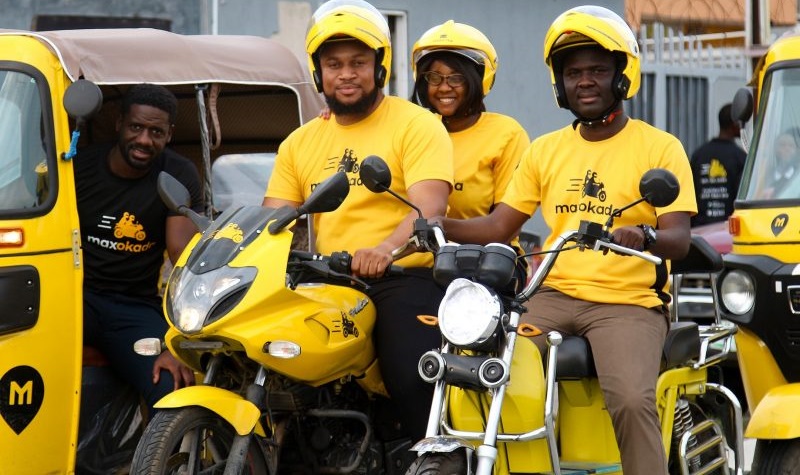
Nigerian mobility startup Metro Africa Xpress (MAX) has secured $8 million in debt funding to expand its electric vehicle operations and supporting infrastructure across Africa. The funding, provided by Netherlands-based impact investor Triple Jump, comes as interest in electric mobility continues to rise across the continent, particularly in markets dealing with high fuel costs and growing transportation demand. The company says the new capital will help increase its EV fleet, expand battery-swapping infrastructure, and strengthen its financing platform for drivers.
Founded in 2015 by Adetayo Bamiduro and Chinedu Azodoh, MAX started as a mobility and vehicle financing platform before shifting more aggressively into electric transportation. Over the past few years, the company has focused on solving practical challenges around mobility in African cities, especially for commercial drivers who face rising fuel and maintenance costs. Its model combines electric motorcycles and vehicles with battery-swapping stations, financing options, and fleet management technology. MAX currently operates in Nigeria, Ghana, and Cameroon, with Nigeria remaining its largest market.
The latest funding round reflects growing investor confidence in Africa’s electric mobility sector, even as the industry still faces infrastructure and financing hurdles. According to reports, Triple Jump’s investment is one of MAX’s first institutional international debt raises. The company plans to use the money to deploy more EVs, improve battery-swapping networks, and continue developing its Pay-As-You-Go financing system for drivers. The deal also follows an earlier $24 million combined equity and debt raise announced by MAX earlier this year as the company accelerated its transition toward cleaner mobility solutions.
For commercial drivers and delivery riders, the expansion could have a direct financial impact. Electric vehicles generally cost less to operate over time because they reduce spending on petrol and engine maintenance. In markets like Nigeria, where fuel prices have increased significantly since subsidy reforms, electric mobility is becoming more attractive for transport operators trying to protect their income. However, adoption still depends heavily on stable charging or battery-swapping infrastructure, affordable financing, and public trust in the technology. That means companies like MAX are not only selling vehicles — they are also trying to build the wider ecosystem needed to make electric transport practical at scale.
What makes this development important is that it highlights how Africa’s EV transition is increasingly being shaped by local operating realities rather than global trends alone. In Europe or China, conversations around EVs often focus on climate targets and consumer adoption. In Africa, the discussion is more connected to fuel costs, driver economics, urban transport efficiency, and access to financing. MAX’s strategy reflects that difference. Instead of targeting luxury consumers, the company is focusing on commercial transport workers who depend on mobility for daily income. Whether this model becomes sustainably profitable at large scale will likely influence how other African mobility startups approach the EV market in the coming years.
The broader question now is whether infrastructure growth can keep pace with investor interest in African electric mobility. Funding rounds show confidence in the sector, but long-term success will depend on execution, affordability, energy reliability, and customer adoption. For MAX, the new funding is another step in a much larger test: can electric mobility move from a promising idea into a financially sustainable everyday reality for African transport systems?
Leave a Reply