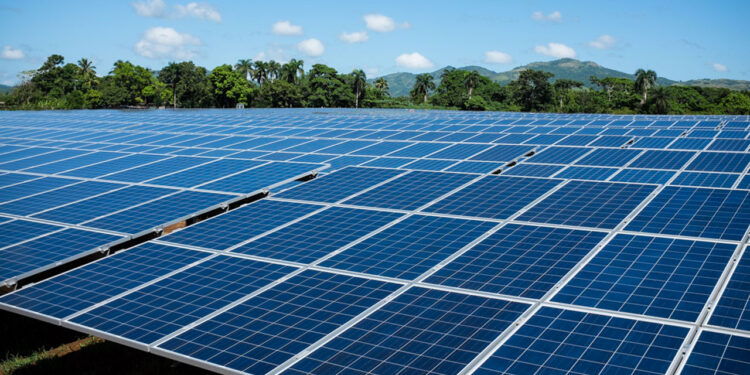
China’s exports of solar panels to Africa have surged by 83% year-on-year, reflecting a sharp rise in global demand for renewable energy solutions and Africa’s accelerating shift toward solar power. The increase highlights both China’s dominant role in the global solar supply chain and Africa’s growing appetite for affordable, off-grid and grid-connected clean energy systems.
Across the continent, many countries are turning to solar energy to address persistent electricity shortages, rising fuel costs, and limited grid infrastructure. The affordability of Chinese-manufactured photovoltaic (PV) panels has made them a preferred option for governments, businesses, and households seeking reliable alternatives to diesel generators and unstable national grids.
Key markets driving this growth include Nigeria, South Africa, Kenya, Egypt, and Ghana, where large-scale solar farms and decentralized rooftop installations are expanding rapidly. Rural electrification projects have particularly benefited from the influx of low-cost solar imports, enabling communities far from national grids to access basic electricity for lighting, communication, and small-scale productive use.
China’s dominance in solar manufacturing has played a central role in meeting this demand. With highly automated production lines and strong supply chain integration, Chinese firms are able to produce solar panels at significantly lower costs than many competitors. This cost advantage has allowed African importers to scale renewable energy projects more quickly, even in challenging economic environments.
The 83% increase also reflects broader global trends, including rising energy security concerns and international commitments to reduce carbon emissions. As climate financing expands and more development institutions prioritize green infrastructure, solar energy adoption in Africa is expected to accelerate further.
However, challenges remain. Limited financing options, regulatory bottlenecks, and inconsistent policy frameworks in some countries continue to slow down large-scale deployment. Additionally, concerns about dependence on imports have prompted discussions about building local solar manufacturing capacity across Africa.
Despite these challenges, the surge in imports signals a clear momentum shift. Solar energy is increasingly seen not just as an environmental solution, but as a practical and economic necessity for Africa’s long-term development. With continued investment and supportive policies, the continent could emerge as one of the fastest-growing solar markets in the world.
Leave a Reply