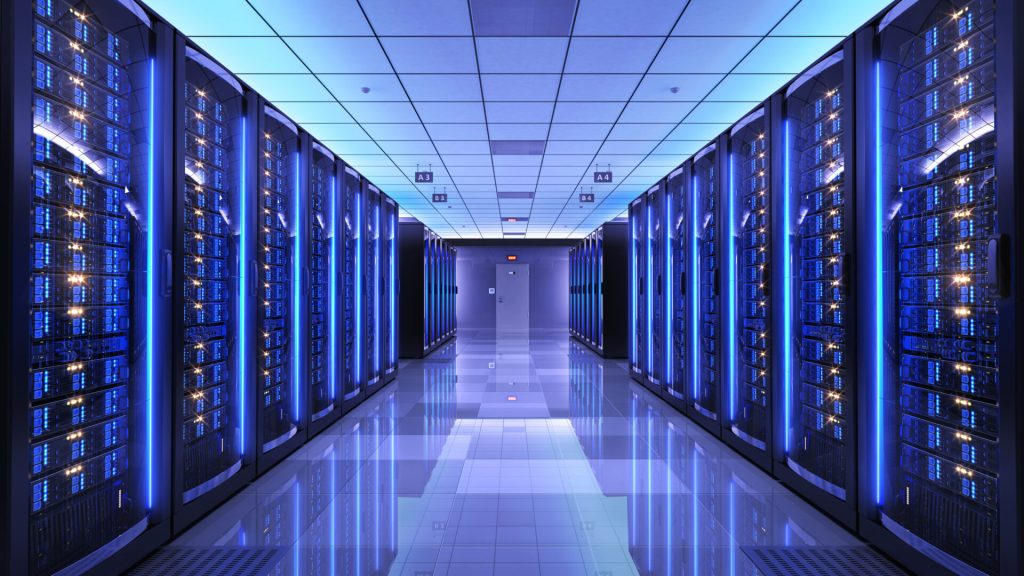
Africa’s push into artificial intelligence is running into a problem far less visible than chatbots or flashy demos: the continent still lacks enough data centers to power the digital systems modern AI depends on. While governments and startups talk increasingly about AI adoption, much of the computing infrastructure behind those tools remains concentrated outside Africa, creating concerns around cost, speed, data control, and long-term digital independence.
The issue did not emerge overnight. Over the past decade, Africa experienced rapid growth in mobile internet usage, fintech platforms, streaming services, cloud software, and digital payments. That growth increased demand for local data storage and cloud computing. Yet compared to regions like North America, Europe, or parts of Asia, Africa still has relatively limited hyperscale infrastructure. Many companies continue to rely on servers hosted abroad, particularly in Europe. For ordinary internet users, that can mean slower services. For AI companies training models or processing large datasets, it creates an even bigger challenge because AI systems require enormous computing power, stable electricity, cooling systems, and high-speed connectivity.
That reality is beginning to shift. Major technology firms and infrastructure companies have expanded their investments in African data centers over the last few years, with activity increasing in markets such as Nigeria, Kenya, South Africa, and Egypt. Companies including Microsoft, Google, and regional infrastructure providers have all signaled growing interest in local cloud capacity across the continent. Governments are also paying closer attention to data localization policies and digital sovereignty. In Nigeria, for example, conversations around keeping financial and government data within the country have intensified as digital services become more central to daily life. AI has added urgency to those discussions because countries that lack computing infrastructure may struggle to fully participate in the next phase of the digital economy.
The effects stretch beyond large tech companies. Startups building AI tools for healthcare, agriculture, logistics, education, or financial services depend on reliable computing infrastructure to run products efficiently. Without nearby data centers, operating costs rise because companies pay more for cloud services hosted overseas while also dealing with latency issues. Researchers and universities face similar limitations when trying to develop local AI models trained on African languages, accents, and cultural contexts. Consumers are affected too, even if indirectly. Slower applications, higher service costs, and weaker digital reliability often trace back to infrastructure gaps that most users never see.
There is also a deeper economic question underneath the infrastructure debate. AI is increasingly tied to productivity, national competitiveness, and control over digital ecosystems. Countries with stronger computing infrastructure are better positioned to attract startups, cloud providers, enterprise software firms, and AI research activity. Africa’s challenge is not simply about “catching up” technologically; it is about whether the continent can build digital systems that reflect local realities instead of depending almost entirely on foreign infrastructure. But building data centers in Africa is expensive and complicated. Reliable electricity remains inconsistent in several markets, cooling costs are high, internet backbone infrastructure is uneven, and access to long-term financing can be difficult. Investors see opportunity, but they also see operational risk.
The next phase of Africa’s AI conversation may depend less on new apps and more on the physical infrastructure beneath them. The continent has one of the world’s youngest populations and a fast-growing digital economy, yet AI development cannot scale sustainably without stronger local computing capacity. The question now is whether governments, infrastructure firms, and technology companies can move quickly enough to build the foundations required for that future — before Africa becomes primarily a consumer of global AI systems rather than a serious builder of its own.
Leave a Reply