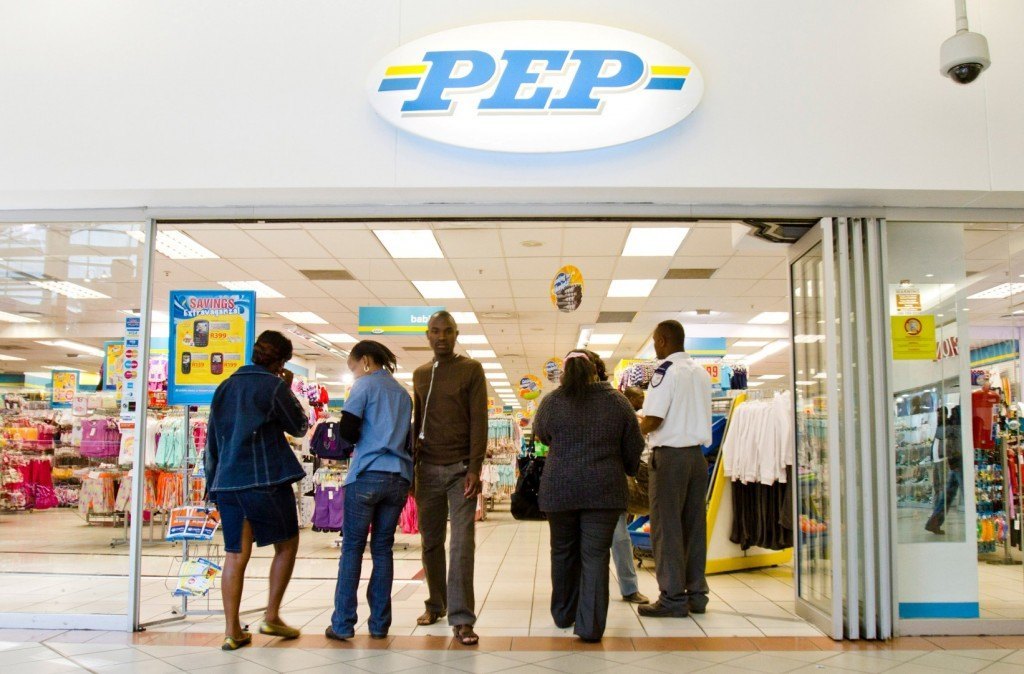
Pepkor is no longer just selling affordable clothing, furniture, and electronics. Its financial services operation is quietly becoming one of the company’s most important growth engines.
The South African retail giant, Pepkor Holdings, reported strong momentum across its finance and fintech businesses alongside its latest half-year earnings. The company’s results showed rising customer activity across lending, insurance, smartphone financing, payments, and informal market services as it pushes deeper into financial products aimed at lower- and middle-income consumers. Revenue for the group rose 13.2% to R54.8 billion in the six months ending March 2026, while its financial services division continued to outperform several traditional retail segments.
Pepkor’s financial expansion did not happen overnight. The company has spent years building a massive retail footprint across Southern Africa through brands like PEP, Ackermans, and OK Furniture. That physical network has now become a distribution system for digital and financial services. Through products like Capfin loans, Abacus insurance, Flash payments, and FoneYam smartphone rentals, Pepkor has steadily moved beyond retail transactions into recurring customer relationships tied to credit, connectivity, and financial access. According to company data, its informal market platform now supports around 176,000 traders, while smartphone financing and fintech services continue growing rapidly.
The latest developments suggest Pepkor wants to deepen that strategy even further. The retailer recently confirmed plans to launch a bank by April 2027 after securing conditional regulatory approval from South Africa’s Prudential Authority. Executives say the business intends to combine digital banking with physical retail access across more than 6,500 stores. The group also acquired banking software company CloudBadger Technologies as part of its push into financial infrastructure. Reports indicate Pepkor aims to attract about 1.8 million primary banking customers within five years of launch.
The strategy matters because it reflects a broader shift happening across African retail and fintech markets. Traditional retailers increasingly see financial services as a more stable and higher-margin business than retail alone, especially in difficult economic conditions where consumer spending can weaken quickly. For millions of consumers, especially lower-income households, retail stores already function as trusted community infrastructure. That trust creates opportunities to offer loans, bill payments, insurance, digital wallets, and smartphone financing directly through existing retail relationships. Pepkor’s FoneYam business alone added more than one million accounts during the latest reporting period as demand for affordable smartphone access continued rising.
What makes Pepkor’s model particularly interesting is how closely it mirrors broader African consumer realities. Large parts of the continent remain underbanked, but smartphone adoption continues growing rapidly. Many consumers may not qualify for traditional banking products, yet they still need credit, connectivity, payments, and insurance services tied to everyday life. Retail-fintech hybrids are emerging partly because they solve practical distribution problems. Physical stores provide customer acquisition, trust, cash handling, and repayment channels in markets where fully digital banking models sometimes struggle with reach or adoption outside major urban centers.
The bigger question is whether retailers like Pepkor can successfully balance financial expansion with the risks that come with lending and banking. Credit businesses can grow quickly during strong consumer periods but become vulnerable when inflation rises, unemployment worsens, or repayment pressure increases. Still, Pepkor’s momentum shows that Africa’s next major fintech players may not always come from standalone startups. Some may emerge from companies that already understand mass-market consumer behavior better than most banks or tech firms do.
Leave a Reply