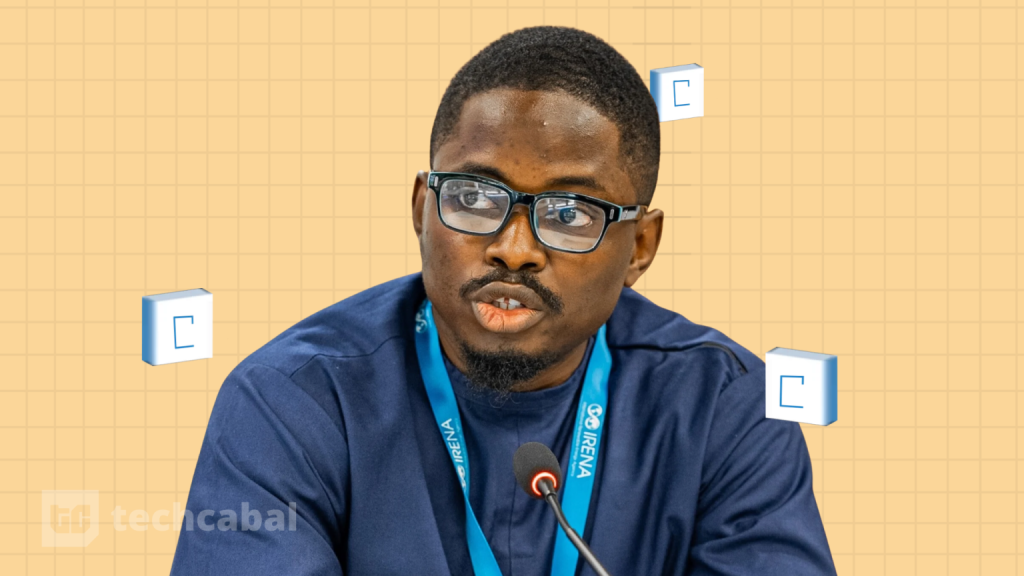
For many young African professionals, an opportunity to build a career in Germany can represent a pathway to stability, advanced technology and global exposure. For Nigerian engineer and entrepreneur Adekoyejo Kuye, however, the opportunity to remain abroad was not enough to outweigh the problems he believed he could help solve at home.
Kuye’s decision to focus his career on Nigeria has become a story about purpose, innovation and the growing role of African entrepreneurs in solving African challenges.
His work has centred on clean energy, sustainable cooling and agricultural infrastructure. Earlier in his career, Kuye worked with Manamuz Electric, where he helped develop solar-powered cold-storage solutions designed for farmers and communities affected by unreliable electricity. His team won the 2021 Sustainable Energy for All Youth Summit’s “Troubleshooting for SDG7” innovation competition for its solar-powered cold-storage concept.
The idea addressed a very Nigerian problem: farmers could produce food but often lacked reliable electricity and storage infrastructure to preserve it. The solar-powered cold rooms offered farmers access to cooling without requiring them to own expensive equipment or depend entirely on the national grid.
That experience helped shape Kuye’s broader entrepreneurial journey. Today, he is Managing Director and Co-Founder of KAMIM Technologies, a Nigerian climate and clean-energy company working on agricultural infrastructure. The company’s CoolCycle platform combines solar-powered cooling with other services intended to improve the journey of agricultural products from farms to markets.
The decision to build in Nigeria is significant because the country’s infrastructure challenges are also opportunities for innovation. Unreliable electricity, food waste, limited cold-chain capacity and inadequate irrigation continue to affect agricultural productivity. Rather than seeing these problems only as reasons to leave, Kuye has approached them as problems worth solving.
His work has also gained international recognition. In 2026, KAMIM and its partners secured $2.1 million in blended capital to expand clean agricultural infrastructure and strengthen food value chains in Nigeria.
KAMIM’s cooling hubs are already reported to serve more than 2,500 farmers, while its projects have generated green jobs and helped reduce food waste.
Kuye’s story therefore goes beyond choosing Nigeria over Germany. It reflects a growing generation of African innovators who see global opportunities not simply as destinations, but as sources of knowledge, networks and capital that can eventually be redirected toward local problems.
Germany may have offered Kuye a promising future. Nigeria offered something different: a difficult problem, a large market and the opportunity to build solutions where they are needed most.
For Kuye, choosing Nigeria appears to have been less about rejecting opportunity abroad and more about defining what opportunity means—and deciding that his greatest impact could come from building at home.
Leave a Reply