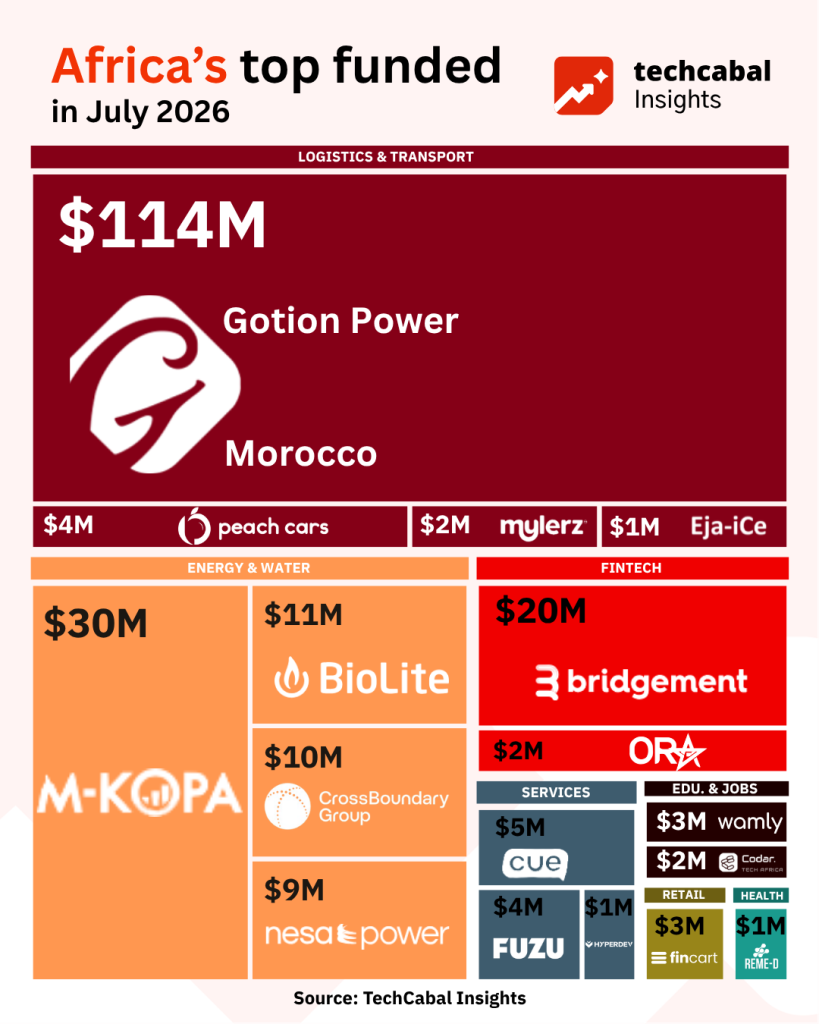
African startups recorded a notable funding surge in July 2026, with electric mobility and debt financing emerging as two of the strongest forces behind the month’s capital activity. The $224 million raised highlights a changing investment landscape in which investors are increasingly backing businesses with physical assets, predictable revenues and clear infrastructure needs.
The July figures come against a broader backdrop of a more selective African venture market. In the first half of 2026, African startups raised about $1.44 billion, broadly matching the previous year’s performance. However, the number of deals fell sharply, showing that investors are concentrating more capital in fewer companies.
Electric mobility has been one of the clearest beneficiaries of this shift. African e-mobility companies have attracted growing interest as rising fuel costs, urban congestion and energy-security concerns create demand for cheaper and cleaner transportation.
Spiro has been a major driver of this trend. The electric-mobility company raised $270 million in equity during the first half of the year, making it one of Africa’s largest startup fundraises in recent years. Its expansion focuses on electric motorcycles, battery-swapping infrastructure and local manufacturing.
The growing importance of debt is equally significant. Rather than relying exclusively on venture capital, African startups are increasingly turning to loans, asset-backed financing and other forms of credit. TechCabal’s analysis found that debt accounted for roughly one-third of African tech funding in the first half of 2026, reflecting greater lender confidence in businesses with tangible assets and predictable cash flows.
E-mobility fits particularly well into this financing model. Electric motorcycles, batteries, charging equipment and vehicles can provide physical assets that lenders can finance. Companies can also generate relatively predictable revenue from vehicle financing, battery swaps, leasing and transportation services.
This represents a major change from the previous funding cycle, when African startups were often valued primarily for their user growth and future potential. Investors are now placing greater emphasis on revenue, operating efficiency and the ability to repay capital.
The trend is not limited to electric motorcycles. Morocco, for example, recently secured $114 million in financing for an electric-vehicle battery factory, including a $110 million African Development Bank loan. The project is designed to strengthen the continent’s EV manufacturing capacity and create hundreds of jobs.
For startups, the shift creates both opportunities and challenges. Companies building infrastructure and generating reliable cash flows may have more financing options, but early-stage businesses without physical assets could find fundraising increasingly difficult.
The $224 million July surge therefore says more than simply that African startups raised more money. It shows where investors believe the next phase of growth may come from: electric mobility, infrastructure and businesses capable of supporting debt with real assets and predictable revenue.
If this pattern continues, Africa’s startup funding market could increasingly resemble an infrastructure-financing market—less focused on growth at any cost and more focused on businesses capable of building durable, cash-generating operations.
Leave a Reply