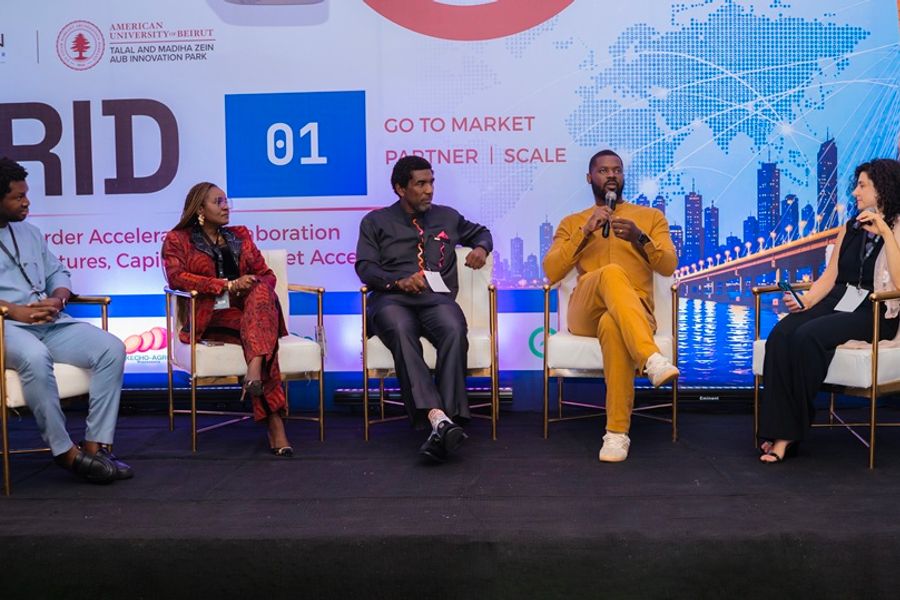
Africa’s startup ecosystem has no shortage of ambitious founders, but many young companies struggle with the same challenge: moving from a promising local business into a scalable regional or global company. GRID 01 is launching in Lagos to address that gap by creating a cross-border pathway connecting African startups with markets, capital, mentors and strategic partners.
The initiative officially launched in Lagos on September 1, 2026, with Nigeria serving as the first market in a wider African rollout. It is a partnership between AXON Accelerator Limited and Zein AUB Innovation Park, the startup accelerator of the American University of Beirut, with support from the Mastercard Foundation.
Under the partnership, AXON will provide local market knowledge and soft-landing support, while Zein AUB iPark brings its venture-building programmes, startup pipeline and international network. The goal is to help founders understand new markets, develop commercially viable products and establish connections with customers and investors.
Nigeria was chosen as the starting point because of the strength of its startup ecosystem, particularly Lagos. According to Maha Zouwayhed, director of Zein AUB Innovation Park, Lagos accounts for around half of Nigeria’s ecosystem activity and transactions, making it a natural entry point for a programme designed to connect African ventures with international opportunities.
GRID 01 is designed to go beyond conventional accelerator support. Founders can receive help validating ideas, developing scalable solutions, finding industry partners and entering new markets. That market-access component could become particularly valuable as African startups increasingly look beyond their home countries for customers and revenue.
For AXON, the programme also offers an opportunity to bring practical business experience into the startup ecosystem. The organisation says its team has more than three decades of business experience in Nigeria and intends to connect startups directly with established businesses and B2B markets.
Funding is another planned component. AXON says it intends to build a separate investment fund alongside the accelerator programme, potentially giving startups another source of capital as they move from validation to expansion. This could become increasingly important as African founders face more demanding investors and greater pressure to demonstrate sustainable business models.
The initiative also has a strong employment and youth-development dimension. GRID 01 is supported by the Mastercard Foundation Scholars Program at AUB and aligns with the foundation’s Young Africa Works strategy, which aims to help 30 million young Africans, particularly young women, access dignified work by 2030.
The first activation will bring together founders from Nigeria, Lebanon, Uganda and Cameroon, demonstrating the cross-border nature of the platform from its earliest stage. Rather than treating African startup ecosystems as isolated markets, GRID 01 is attempting to build bridges between them.
Its Lagos debut therefore represents more than the arrival of another accelerator. It reflects a broader shift in how African startups can scale—through regional collaboration, international networks, industry partnerships and access to capital.
If GRID 01 can turn those connections into customers, investment and successful market expansion, Lagos could become more than the programme’s first node. It could serve as a gateway through which African startups reach the rest of the continent and, ultimately, global markets.
Leave a Reply