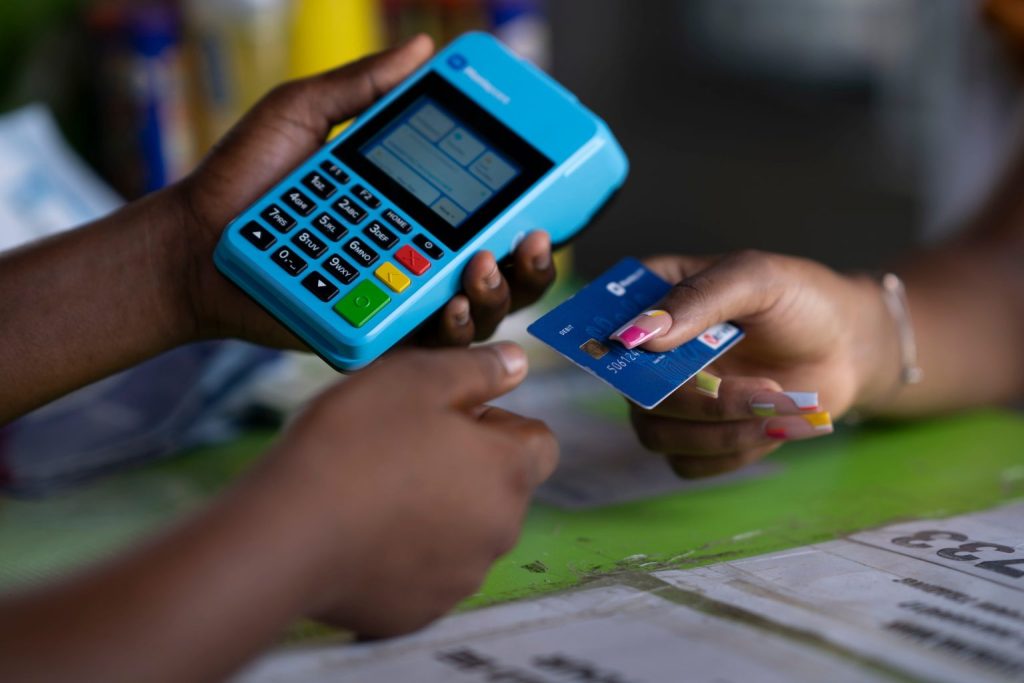
The familiar point-of-sale terminal is evolving beyond its traditional role as a tool for accepting payments. Across Africa, fintech companies are increasingly turning the devices into gateways for broader financial services, including savings, insurance, credit and investment products.
The shift reflects a simple reality: the PoS terminal often sits at the centre of financial activity in communities where bank branches and digital banking infrastructure remain limited. In Nigeria, for example, millions of consumers interact with financial services through PoS agents, making the terminal an important distribution channel for the formal financial system.
When investment products are introduced through these channels, the potential market expands considerably. Instead of requiring customers to visit a bank, download a separate investment application or understand complex financial platforms, fintech providers can allow agents to introduce customers to products such as mutual funds, treasury-backed investments or other regulated securities.
For customers, the appeal is accessibility. An individual who regularly visits a neighbourhood agent to withdraw cash or pay bills could potentially use the same relationship to begin saving or investing. For fintech companies, the model creates an opportunity to turn an existing payments network into a broader financial-services platform.
It could also change the economics of PoS businesses. Traditionally, agents generate revenue through transaction commissions and service fees. Investment distribution could provide an additional income stream, particularly if agents earn commissions for successfully onboarding customers to eligible financial products.
However, turning PoS infrastructure into an investment channel introduces responsibilities that do not exist in ordinary payments.
Investment products carry risks, and customers need to understand where their money is going, what returns are promised or projected, how long funds may be locked up and what could cause them to lose money. The physical presence of an agent could also create a perception that an investment product is equivalent to a cash deposit, even when it is not.
This makes regulation and consumer protection particularly important. Financial providers must ensure that agents are properly trained, customers receive accurate information and investment products are offered only within the permissions of the relevant regulators.
There is also a question of trust. PoS agents have built relationships with customers through everyday transactions. That trust can help financial products reach underserved communities, but it also means customers may rely heavily on an agent’s recommendation. Clear disclosures and safeguards are therefore essential to prevent mis-selling.
For fintech companies, the bigger opportunity is not simply adding an investment button to a PoS terminal. It is building an integrated financial ecosystem around an existing distribution network.
Payments can become the entry point. Savings can follow, then insurance, credit and investment. The same customer relationship could potentially support several financial services while giving fintechs more revenue opportunities.
If executed responsibly, the transformation could make investing more accessible to millions of Africans who have traditionally been excluded from formal investment markets. But the success of the model will depend on whether convenience is matched by transparency, regulation and financial education.
The PoS terminal may have started as a machine for moving money. Its next evolution could make it a doorway into the wider financial economy.
Leave a Reply