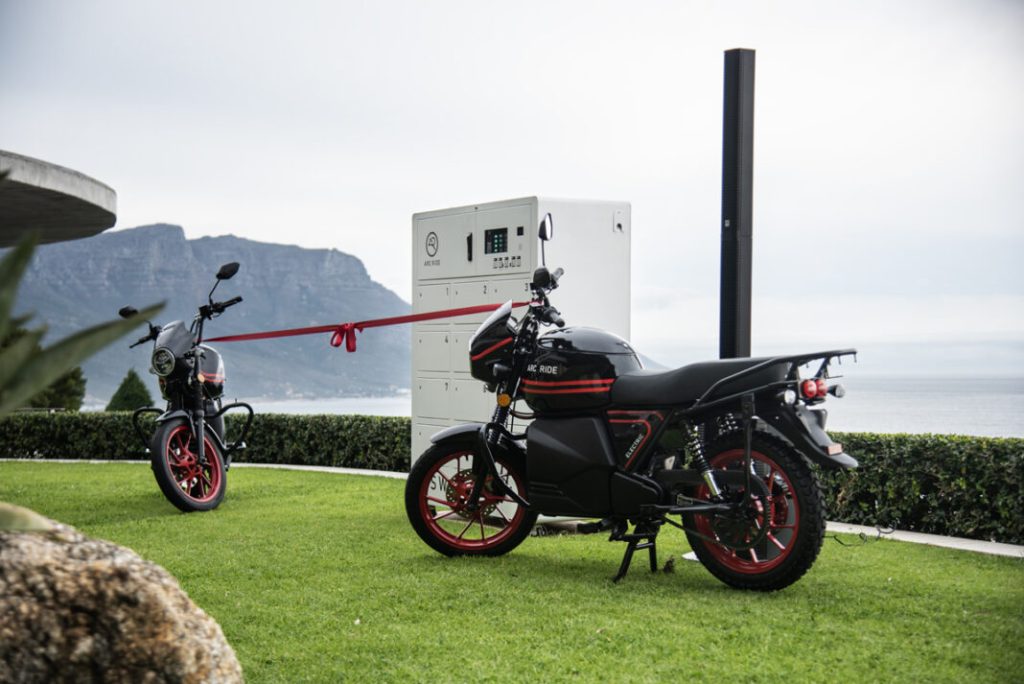
Africa’s electric mobility market is moving from early experimentation toward a more infrastructure-driven phase, and Kenyan startup ARC Ride is positioning itself around one of the biggest challenges facing electric motorcycle adoption: keeping vehicles powered and on the road.
Founded in 2020, ARC Ride has built its business around electric two-wheelers and a Battery-as-a-Service (BaaS) model. Instead of requiring riders to purchase and manage their own batteries, the company operates battery-swapping infrastructure that allows depleted batteries to be exchanged for charged ones. Its technology platform also uses connected devices to track vehicles, batteries and swap activity.
That model is becoming particularly relevant as motorcycles remain an important part of urban transportation and commercial delivery across African cities. For riders whose income depends on keeping a motorcycle moving, waiting hours for a battery to recharge can undermine the economics of electrification. Battery swapping attempts to solve that problem by making energy replenishment closer to the experience of refuelling a conventional motorcycle.
ARC Ride is now taking that infrastructure approach beyond Kenya. In September 2026, the company launched its Panther electric motorcycle and battery-swapping service in South Africa, targeting last-mile delivery fleets. The initial rollout includes swap stations and ARC Hubs in selected parts of Cape Town and Gauteng. The Panther has a stated range of about 110 kilometres, while ARC Ride’s battery-as-a-service model keeps ownership of the batteries with the company.
The South African expansion follows a significant financing round. ARC Ride raised $33.3 million in a combination of equity and asset-backed debt, with Novastar Ventures and Norrsken22 leading the investment and institutions including the International Finance Corporation, British International Investment and Proparco participating. The company plans to use the capital to add 5,000 electric motorcycles, strengthen its battery infrastructure and expand into markets including Ghana, South Africa, Tanzania and Uganda.
The significance of ARC Ride’s strategy extends beyond selling electric motorcycles. The company is effectively betting that Africa’s EV transition will require an infrastructure layer capable of making electric vehicles practical for high-mileage commercial users.
Its technology platform is designed around connected batteries, vehicle tracking, payments and battery-swapping infrastructure. ARC Ride also describes its batteries as open-architecture and interoperable, while its platform is designed to support partnerships and integrations.
But scaling the model across Africa will require more than capital. Swap-station density, electricity availability, vehicle affordability, maintenance networks and local regulatory conditions will influence adoption in each market.
ARC Ride’s expansion therefore offers a glimpse of a broader shift in African mobility: the EV opportunity is increasingly being built around the infrastructure that keeps electric vehicles moving. If battery swapping can scale alongside electric motorcycles, companies such as ARC Ride could become important participants in the continent’s transition away from petrol-powered two-wheelers.
Leave a Reply