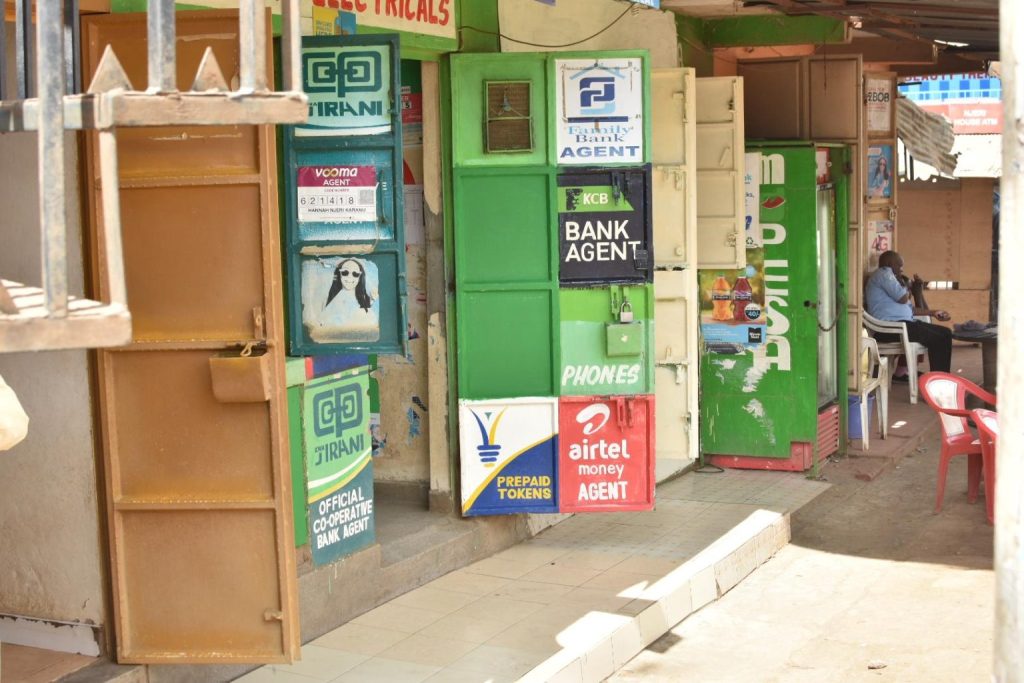
Kenya’s mobile money economy is continuing to expand, but the physical agent network that helped build the country’s digital payments revolution is showing signs of pressure. The latest data highlights a growing gap between rising mobile money adoption and the changing economics of running an agent outlet.
Between March and June 2026, Kenya’s registered mobile money agents fell by 5.6%, from 602,470 to 568,463, a reduction of more than 34,000 registered outlets. At the same time, mobile money subscriptions increased from 53.37 million to 54.01 million, pushing penetration above 100%.
The figures illustrate a significant shift in Kenya’s financial services market: more people are using mobile money, but they may not need to visit a physical agent as frequently.
For years, agents have served as the bridge between Kenya’s cash economy and digital financial services. Customers could walk into a small shop to deposit or withdraw money, transfer funds, pay bills or access other services. But as smartphones, mobile applications, merchant payment systems and digital wallets become more widely used, an increasing number of transactions can happen directly from a customer’s phone.
The pressure is also visible in the amount of cash moving through agents. Central Bank of Kenya data shows that agents handled KSh7.514 trillion in cash transactions between January and November 2025, down from KSh7.944 trillion during the same period in 2024.
For agents, declining transaction activity can create a difficult business environment. A July 2026 analysis estimated average annual M-Pesa commissions per agent at KSh112,244 for the financial year ended March 2026, down from KSh124,720 in 2025 and KSh144,355 in 2024. The estimates were based on Safaricom’s reported commissions and agent numbers.
Yet the picture is more complicated than simply saying thousands of agents have closed. The Communications Authority’s registered-agent figures differ from the Central Bank of Kenya’s active-agent data. CBK recorded 572,104 active mobile money agents in June 2026, compared with 548,010 in April. In June alone, those active agents processed 212.45 million cash-in and cash-out transactions worth KSh682.46 billion.
This suggests that physical agents remain important, particularly for customers who still depend on cash access. However, their role is changing as digital payments move beyond traditional deposits and withdrawals.
The challenge for agents is therefore not necessarily that mobile money is disappearing. It is that mobile money is becoming more digital.
As Kenya expands merchant payments, smartphone usage and app-based financial services, agents may need to diversify beyond traditional cash transactions. Agency banking, merchant services, bill payments and other financial products could become increasingly important sources of revenue.
Kenya’s mobile money revolution was built partly on its vast network of neighbourhood agents. The next stage of that revolution could depend on whether those same businesses can adapt to a market where the customer increasingly carries the payment infrastructure in their pocket.
Leave a Reply