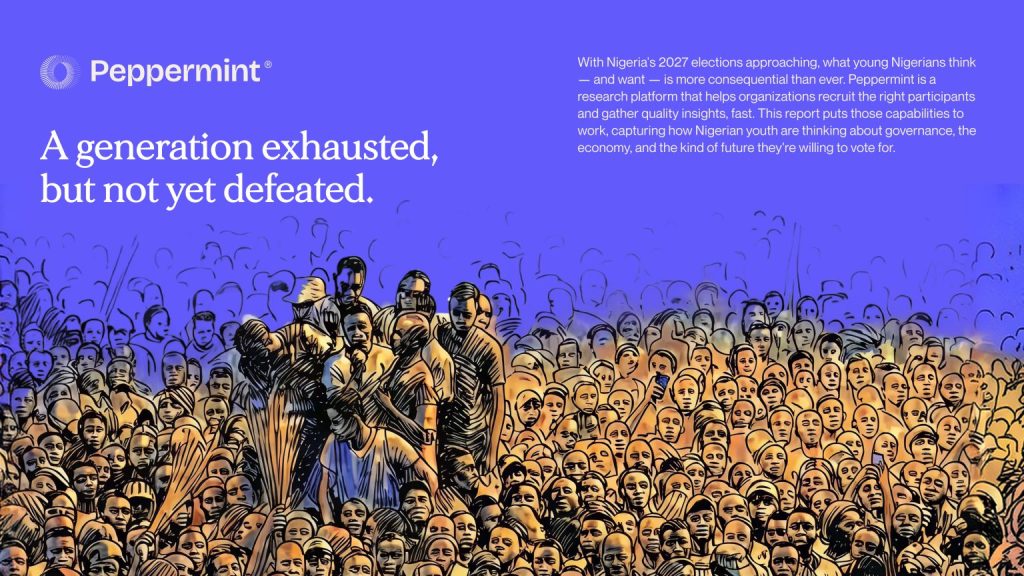
Social media has become an increasingly important part of political conversation in Nigeria, particularly among younger citizens. A survey attributed to Peppermint suggests that X is playing a significant role in shaping political views, with 60% of young Nigerians surveyed saying the platform influences how they understand or form opinions about politics.
The finding highlights the growing importance of digital platforms in a country where young people make up a large share of the population. X, formerly known as Twitter, has developed into a major arena for political discussion, where users debate policies, react to government decisions, share news and scrutinise public officials.
For many young Nigerians, political information no longer comes exclusively from television, newspapers or political rallies. Instead, social media can provide immediate access to breaking developments, commentary and competing viewpoints. A single post can generate thousands of responses within minutes, turning political issues into nationwide conversations.
The influence of X was particularly visible during Nigeria’s #EndSARS protests in 2020, when young people used social media to coordinate activities, share information and draw international attention to events in the country. More recently, digital platforms have remained central to discussions about governance, economic conditions and electoral participation.
However, influence on political views does not necessarily mean that online engagement translates directly into political participation. Recent research illustrates a gap between young Nigerians’ digital political activity and their involvement in formal political processes. A September 2026 Premium Times report, citing a Campus Reporter survey of 222 university students across 34 institutions, found that 52.1% of respondents were not registered to vote, while 59% of those aged 18 to 21 were not registered.
The same broader pattern has been observed in research on digital political engagement. A study of youths in Lagos found that digital media could contribute to political empowerment, with 58.8% of respondents saying they felt empowered to participate in politics through digital media.
The growing influence of X also raises questions about the quality of political information young people encounter. Social platforms allow users to access diverse perspectives, but they also make it possible for inaccurate claims, misleading posts and partisan narratives to spread quickly. Users may therefore encounter political information without the editorial filtering traditionally provided by news organisations.
This makes digital literacy increasingly important. Young users need to distinguish between verified information, commentary, political campaigning and unsubstantiated claims before forming conclusions.
The Peppermint finding, if representative of its surveyed population, points to a broader transformation in how political ideas circulate among Nigeria’s younger generation. X is no longer simply a platform for entertainment or social interaction; it has become part of the country’s political information ecosystem.
As Nigeria moves toward the 2027 general elections, the role of digital platforms is likely to remain significant. The key question is not simply how many young Nigerians discuss politics online, but how online conversations interact with voter education, civic participation and engagement with formal democratic institutions.
Leave a Reply