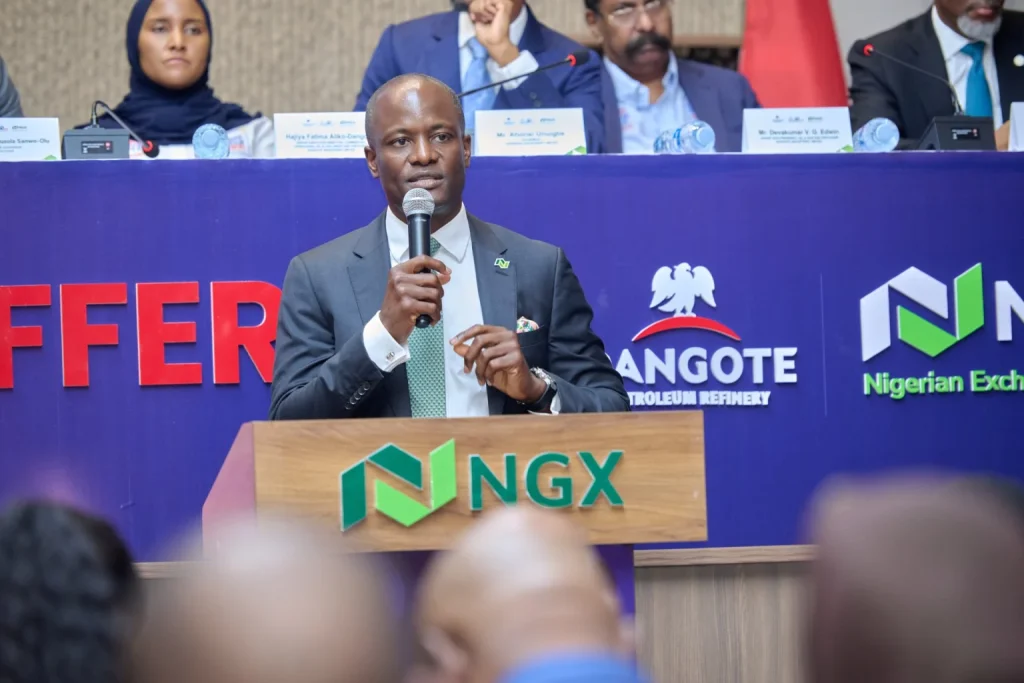
Dangote Industries Limited is showing what happens when an African company moves from building a dominant domestic business to testing its strength in international markets. For Nigerian startups, that expansion offers a lesson that goes beyond manufacturing: building a valuable company ultimately requires creating something that can survive beyond its original market.
Dangote’s growth has been driven by an ability to identify large structural gaps in Nigeria and build businesses around them. From cement and food products to refining and petrochemicals, the group has invested heavily in industries where local demand is substantial but supply has historically depended on imports.
The strategy has helped create scale. But scale in Nigeria is not necessarily the same thing as global competitiveness.
That distinction is increasingly important for startups. Nigeria remains one of Africa’s largest technology markets, with a huge population, strong entrepreneurial activity and a rapidly expanding digital economy. Yet many startups still build their growth strategies around capturing more Nigerian customers rather than developing products capable of travelling across borders.
Dangote’s international expansion provides a different perspective. The objective is not simply to become the biggest company in Nigeria. It is to use the Nigerian market as a foundation for competing elsewhere.
For startups, that could mean rethinking what an exit actually represents.
In the technology ecosystem, an exit can come through an acquisition, merger or public listing. But before investors and potential buyers can place a high value on a startup, the business typically needs to demonstrate more than user growth. Revenue quality, strong governance, operational resilience, intellectual property and the ability to expand into new markets can all determine whether a company becomes an attractive acquisition target or remains dependent on funding.
Nigeria’s startup ecosystem has produced companies that have attracted international investors and expanded across Africa. Yet the wider market continues to face challenges around funding, profitability and exits. Raising another round can extend a company’s runway, but it does not necessarily create liquidity for founders or early investors.
That makes strategic expansion particularly important.
A startup capable of solving a problem in Nigeria and then adapting the same solution to Kenya, Ghana, Egypt, South Africa or markets outside Africa has a larger potential addressable market. More importantly, it can demonstrate that its value is not tied exclusively to one country’s economic conditions.
Dangote’s story also highlights the importance of infrastructure and execution. Expanding into new markets requires capital, regulatory knowledge, supply chains, talent and patience. Technology startups may not need factories or physical distribution networks on the same scale, but they face their own versions of those challenges.
The lesson is therefore not that every Nigerian startup should try to become another Dangote. It is that founders should think about what their companies look like when domestic growth begins to slow.
Can the product travel? Can the business generate sustainable revenue? Can another company integrate it? Can investors eventually realise returns?
Nigeria can be the starting point, but it does not have to be the ceiling.
Dangote’s market expansion is ultimately a reminder that the strongest African businesses may be those that use local scale to build global relevance. For Nigerian startups searching for their next stage of growth—and eventually a meaningful exit—the real opportunity may be to stop thinking only about how big they can become at home and start proving how far what they have built can travel.
Leave a Reply