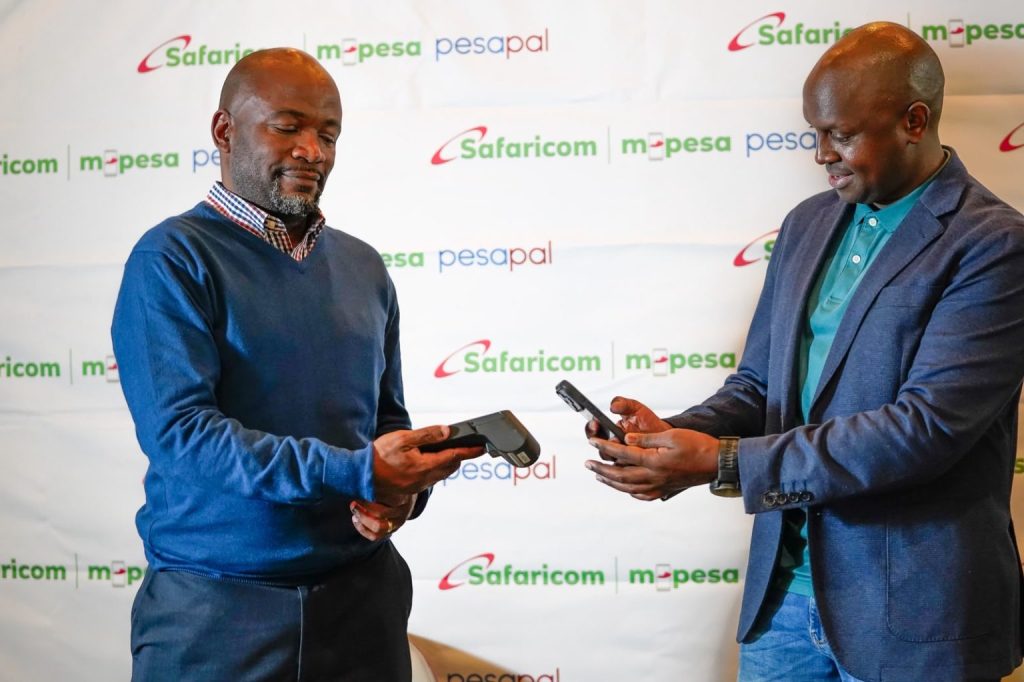
Safaricom is taking M-PESA further into physical retail with a new partnership with Kenyan payments company Pesapal, allowing customers to make contactless payments by tapping their smartphones on compatible point-of-sale (POS) terminals.
The rollout covers about 30,000 Pesapal terminals across Kenya, giving Safaricom a way to expand M-PESA’s presence at physical checkout points without having to build and distribute a separate POS network. The terminals are concentrated in locations including restaurants, hotels and selected supermarkets.
The new Tap-to-Pay feature is designed to remove one of the more familiar steps in M-PESA transactions: manually entering a merchant’s Till Number and payment amount.
With an NFC-enabled Android phone or iPhone, a customer can tap the device against a compatible Pesapal terminal. The transaction details are then presented for verification before the customer authorises the payment through M-PESA, using a PIN or biometric authentication. Customers whose phones do not support NFC can instead use a QR code displayed on the terminal.
The merchant’s existing M-PESA Till Number remains the destination for the payment. This means the partnership changes the customer experience without forcing merchants to replace their existing M-PESA payment structure.
That approach could be important for adoption. Rather than asking businesses to purchase new infrastructure specifically for contactless M-PESA payments, Safaricom is building on equipment already deployed across the retail ecosystem.
Pesapal said it spent six months testing the service before making it available to merchants with compatible terminals. The company already provides payment infrastructure to thousands of businesses, giving Safaricom access to an established merchant network.
The partnership also expands Safaricom’s broader effort to reduce friction in M-PESA payments. Alongside Tap-to-Pay, the companies are introducing Dynamic Scan-to-Pay, which allows customers to scan a QR code generated on a Pesapal POS terminal. Merchant details and the payment amount can be populated automatically, reducing manual input.
Safaricom says its existing Scan-to-Pay service is already available at more than 60,000 merchant outlets and is targeting 500,000 outlets within the next year. The company is therefore positioning contactless payments as part of a wider transformation of how customers interact with M-PESA at checkout.
The move is also notable because Safaricom has tried contactless M-PESA before. Its M-PESA 1Tap product, introduced in 2017, used NFC-enabled cards, wristbands and stickers but was eventually discontinued after failing to gain sufficient adoption. The latest approach removes the need for dedicated payment accessories by turning customers’ smartphones into the contactless device.
For Safaricom, the bigger opportunity is not simply making M-PESA faster. It is keeping Kenya’s dominant mobile-money platform relevant as consumer payment habits evolve.
For Pesapal, the partnership gives its POS network a deeper role in mobile-money transactions while allowing merchants to accept M-PESA through infrastructure they already use.
Ultimately, the success of the rollout will depend on whether customers make tapping their phones a habit. But by combining M-PESA’s massive user base with Pesapal’s existing physical payment infrastructure, Safaricom is taking a significant step toward making mobile money feel less like a phone-based service and more like an everyday contactless payment network.
Leave a Reply