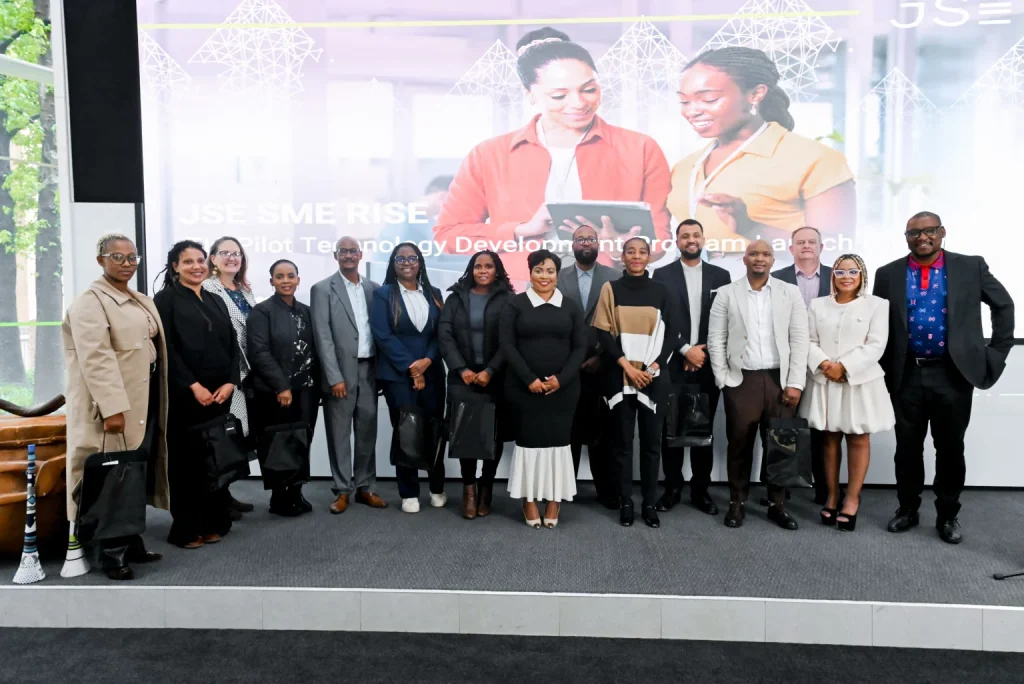
The Johannesburg Stock Exchange (JSE) is expanding its support for South Africa’s technology sector with an initiative designed to help 10 small and medium-sized technology companies become more attractive to investors and better prepared for future capital raising.
The programme reflects a growing recognition that South Africa’s technology ecosystem does not only need more startups. It also needs stronger businesses capable of moving from early-stage growth to institutional investment and, eventually, larger capital markets.
The selected SMEs will receive structured support focused on improving the areas investors typically examine before committing capital. These include financial management, corporate governance, business strategy, investor readiness and access to potential funding networks.
For many technology businesses, raising capital becomes difficult not because their products lack potential, but because their internal structures have not developed at the same pace as the business. Weak financial reporting, unclear governance structures, limited performance data and poorly defined growth strategies can all make investors reluctant to commit.
The JSE programme is intended to address those gaps before companies reach the point where they need significant external funding.
The focus on just 10 businesses also highlights the importance of quality over volume. Rather than attempting to support the entire technology sector at once, the initiative can provide intensive assistance to companies with the potential to scale.
For participating SMEs, becoming “investor-ready” could have benefits beyond simply securing a funding round. Stronger governance and financial systems can make it easier to manage rapid growth, negotiate with investors and demonstrate performance to lenders and strategic partners.
It could also create a longer-term pathway into South Africa’s capital markets.
The JSE has traditionally been associated with large listed companies, but its growing engagement with smaller businesses reflects changing attitudes toward how companies develop before reaching public markets. Technology companies often require several stages of financing before an IPO becomes realistic, making early preparation increasingly important.
South Africa’s tech sector has already produced companies with regional and global ambitions across fintech, software, e-commerce, artificial intelligence and other areas. However, many smaller businesses continue to face challenges accessing growth capital.
The funding environment has also become more demanding. Investors are increasingly looking for companies with clear revenue models, strong unit economics, credible management teams and realistic routes to profitability. Simply demonstrating rapid user growth is no longer enough.
That makes investor-readiness programmes particularly relevant.
The JSE’s initiative could therefore serve as a bridge between entrepreneurship and institutional capital. By helping SMEs understand what sophisticated investors expect, the programme can improve their ability to communicate their financial performance, articulate their growth plans and build businesses that can withstand greater scrutiny.
The broader objective is not necessarily to push all 10 companies toward an immediate stock-market listing. Instead, it is about creating businesses that are structurally prepared for whatever comes next—whether that means venture funding, private equity, strategic investment, debt financing or eventually accessing public markets.
For South Africa’s technology ecosystem, that distinction matters. A stronger pipeline of investment-ready SMEs could help address one of the sector’s biggest challenges: turning promising technology businesses into sustainable, scalable companies capable of attracting increasingly sophisticated pools of capital.
If successful, the initiative could provide a model for how capital-market institutions can support the technology companies that may become tomorrow’s major African businesses.
Leave a Reply