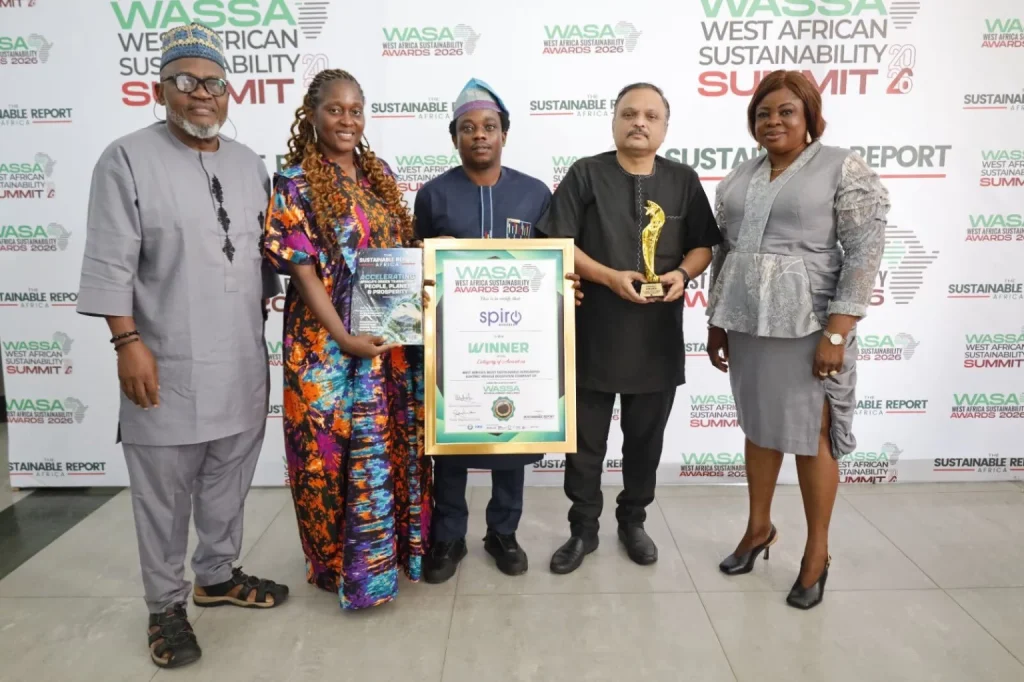
Spiro has been named the Most Sustainable Integrated Electric Vehicle Ecosystem Company of the Year at the West Africa Sustainability Summit 2026, recognising the company’s growing role in advancing cleaner transportation and electric mobility across the region.
The award highlights Spiro’s approach to electric mobility, which extends beyond deploying electric motorcycles to building an integrated ecosystem around charging, battery swapping, vehicle access and sustainable transportation. Its model reflects the growing push across African markets to reduce dependence on petrol-powered vehicles while creating mobility solutions suited to local conditions.
Electric mobility is gaining momentum in West Africa as cities face rising fuel costs, traffic congestion, air pollution and the environmental impact of conventional transportation. However, the transition presents significant infrastructure and affordability challenges. Spiro’s strategy has focused on addressing some of these barriers through an ecosystem designed around electric two-wheelers and supporting infrastructure.
A key part of that model is battery swapping. Instead of requiring riders to wait for batteries to charge, swapping infrastructure allows depleted batteries to be exchanged for charged ones, helping commercial riders spend more time on the road. For riders who depend on motorcycles for income, reducing downtime can be as important as lowering fuel expenses.
The company’s recognition also comes as sustainability becomes increasingly connected to economic opportunity in Africa. Electric mobility can reduce emissions while potentially lowering operating costs for drivers and delivery businesses. At the same time, the development of charging and battery infrastructure can create new opportunities across energy, technology, manufacturing and transportation.
For West African cities, where motorcycles play an important role in everyday transportation and commerce, electrification could have a particularly significant impact. Commercial riders, logistics operators and other high-mileage users stand to benefit from vehicles that can offer lower running costs compared with traditional petrol motorcycles.
Spiro’s award therefore reflects a broader shift in how sustainability is being viewed in the region. Rather than treating environmental responsibility as a separate corporate initiative, companies are increasingly incorporating sustainability into the products, infrastructure and business models they build.
The company’s integrated approach could also help address one of Africa’s biggest electric-mobility challenges: infrastructure fragmentation. Electric vehicles require reliable access to energy, batteries, charging or swapping networks, maintenance and financing. Building these elements together can make adoption easier for consumers and businesses.
Still, scaling electric mobility across West Africa will require continued investment, supportive policies, reliable electricity infrastructure and greater consumer awareness. Governments, financial institutions, energy companies and mobility operators will all have roles to play.
Spiro’s recognition at the West Africa Sustainability Summit 2026 signals that electric mobility is moving further into the mainstream of Africa’s sustainability conversation. As the region searches for cleaner and more affordable transportation systems, integrated electric-vehicle ecosystems could become an important part of the transition.
For Spiro, the award provides recognition of its current efforts while placing greater attention on the opportunity to make electric transportation more accessible across African markets.
Leave a Reply