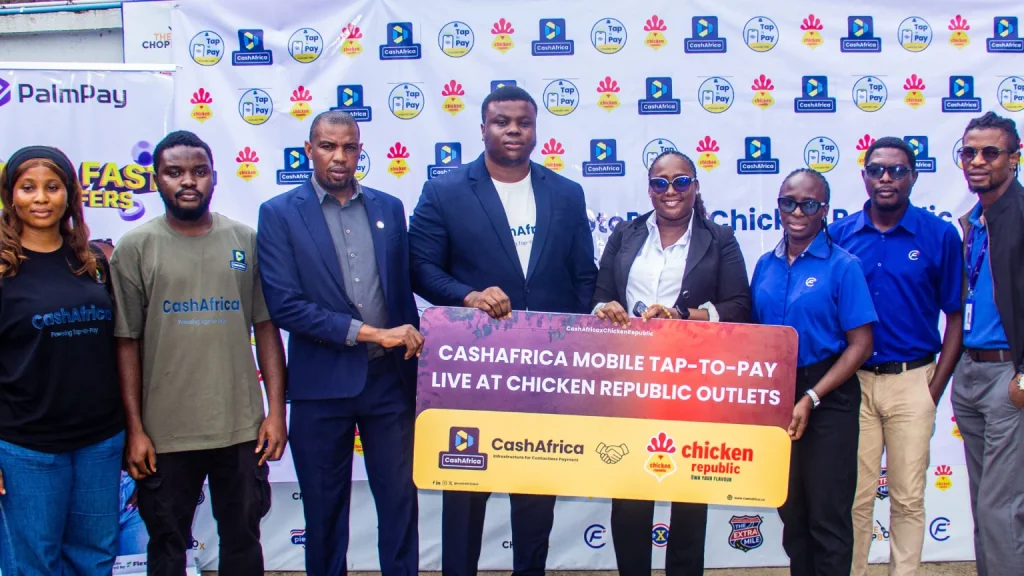
CashAfrica is bringing mobile tap-to-pay technology to Chicken Republic outlets, highlighting the growing adoption of contactless payments in Nigeria’s quick-service restaurant industry. The move reflects efforts by payment technology providers and food businesses to make transactions faster, more convenient and better suited to increasingly digital consumer habits.
Tap-to-pay technology allows customers to make payments by bringing a compatible device close to a payment terminal. Depending on the solution, transactions can be completed using a contactless bank card or a supported smartphone, reducing the need to insert cards or handle cash.
For a busy restaurant chain such as Chicken Republic, which serves customers across multiple locations, faster payment processing could help improve checkout experiences, particularly during lunch breaks, evening rushes and other peak periods. Shorter transaction times may also help staff serve more customers efficiently while reducing queues at payment counters.
The development comes as Nigeria’s payments ecosystem continues to evolve beyond traditional card transactions and cash-based purchases. Mobile banking applications, instant transfers, digital wallets and contactless technologies are changing how consumers pay for everyday goods and services.
Restaurants are an important market for these innovations because they process frequent, relatively small transactions. Even modest improvements in checkout speed can make a difference when repeated across numerous outlets and thousands of daily customer interactions.
For CashAfrica, deploying its technology in a recognised restaurant chain could provide an opportunity to demonstrate how contactless payments can operate in a high-volume retail environment. Successful implementation could also strengthen the case for wider adoption among supermarkets, retailers, hospitality businesses and other merchants seeking more efficient payment systems.
Chicken Republic could benefit from improved transaction convenience and a more modern checkout experience. Digital payment records may also support reconciliation, sales monitoring and other operational processes, although the extent of these benefits will depend on how the payment solution integrates with the restaurant’s existing systems.
Nevertheless, contactless payment adoption faces several practical challenges. Customers need compatible payment instruments, while merchants require reliable terminals, secure transaction processing and dependable network connectivity. Staff training and clear instructions for customers will also be important to ensure that the technology is easy to use.
Security remains another consideration. Contactless transactions must be supported by appropriate authentication, encryption and fraud-monitoring measures. Providers and merchants must also ensure that their systems comply with relevant payment regulations and data-protection requirements.
Mobile tap-to-pay does not eliminate the need for alternative payment methods. Some customers may prefer cash or bank transfers, while others may lack compatible devices or cards. Offering multiple payment options will therefore remain important for maintaining an inclusive customer experience.
Ultimately, CashAfrica’s introduction of mobile tap-to-pay at Chicken Republic outlets signals another step in the digital transformation of Nigeria’s retail payments market. Its broader significance will depend on customer adoption, transaction reliability and the measurable improvements it delivers to restaurant operations.
As competition intensifies among payment providers, technologies that combine speed, security and convenience could play an increasingly important role in shaping how Nigerians pay for everyday purchases.
Leave a Reply