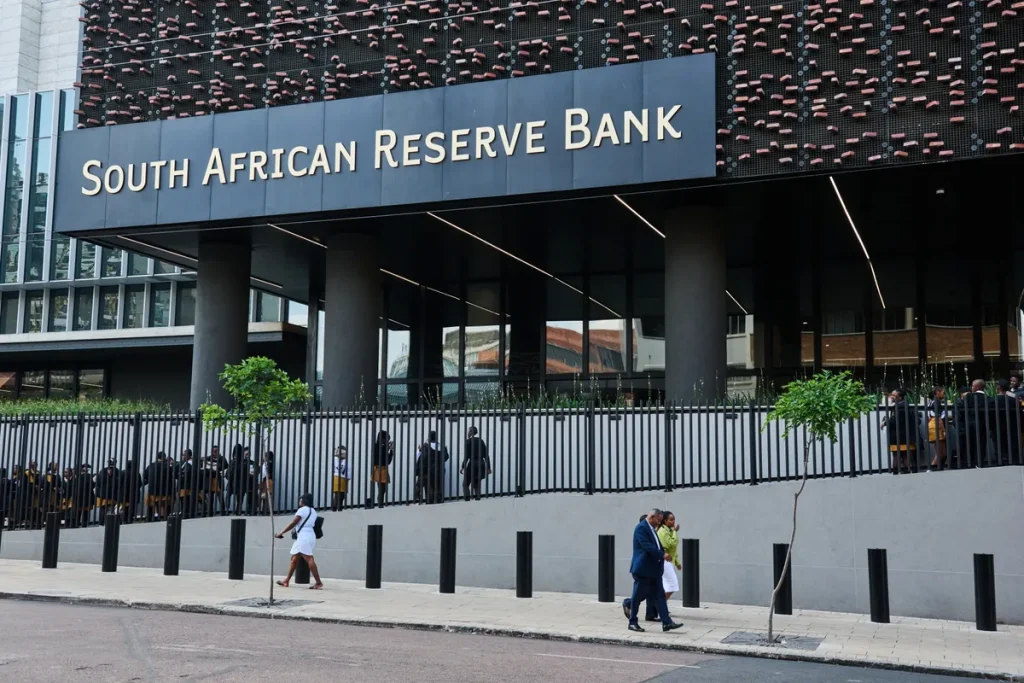
South Africa’s banking sector could face a significant shift as the country’s central bank moves to open its national payments infrastructure to fintech companies, telecommunications operators and retailers. The proposed reforms could weaken banks’ traditional control over payment processing while creating new opportunities for non-bank businesses to compete for customers and transaction revenue.
The South African Reserve Bank (SARB) announced plans to allow appropriately authorised non-bank institutions to access parts of the national payments system directly, with implementation expected from around mid-2027. The initiative forms part of its Payments Ecosystem Modernisation programme, which aims to increase competition, reduce transaction costs and expand access to digital financial services.
Under the existing arrangements, fintech companies generally depend on banks to access essential payment infrastructure. Although these partnerships enable businesses to offer digital payment services, they can also create additional costs and limit how independently fintechs operate.
The proposed framework would allow eligible non-bank providers to undertake specified activities, potentially including electronic money issuance, merchant payment processing and other payment services, without requiring a sponsoring bank for every activity.
According to TechCabal, these changes could allow payment companies to retain more revenue previously spent on bank sponsorship fees or use potential savings to offer customers more competitive prices.
However, direct access would not mean unrestricted participation. Providers would still need appropriate authorisation and would be subject to requirements covering governance, customer funds, operational resilience and reporting.
The reform could intensify competition from fintechs, mobile operators and retailers that already have established customer relationships and distribution networks.
For example, telecommunications companies can use their mobile platforms to reach customers, while retailers can integrate payments into everyday shopping and money-transfer services. Fintechs can focus on specialised products for merchants, individuals and businesses underserved by traditional financial institutions.
The Reserve Bank also wants to improve the adoption of PayShap, South Africa’s instant-payment service. According to TechCentral, PayShap processes approximately 60 million transactions monthly, considerably below the central bank’s target of 500 million transactions per month by 2029.
Expanding participation and improving interoperability could help digital payments become more accessible. Nevertheless, achieving widespread adoption will require affordable pricing, customer awareness, reliable technology and convenient payment options.
For established banks, the proposed changes could put pressure on income generated through payment services and sponsorship arrangements. Banks may need to compete more aggressively on pricing, reliability and customer experience while exploring partnerships with fintech businesses.
Consumers and merchants could benefit if increased competition translates into lower transaction fees and faster, more convenient payments. Small businesses, in particular, could gain from payment solutions that are easier and less expensive to use.
However, these benefits are not guaranteed. Non-bank providers will face infrastructure, compliance and security costs, and competition will only reduce prices if providers pass efficiencies on to customers.
South Africa’s proposed reforms signal a move towards a more open payments ecosystem in which banks remain important but no longer serve as the only practical gateway for many payment activities.
The long-term outcome will depend on implementation, regulatory safeguards and the ability of new entrants to deliver secure, dependable services. If successful, the reforms could reshape the balance of power in digital payments and give consumers and businesses more choice.
Sources: Reuters, October 2026; South African Reserve Bank, October 2026; TechCentral, October 2026.
Leave a Reply