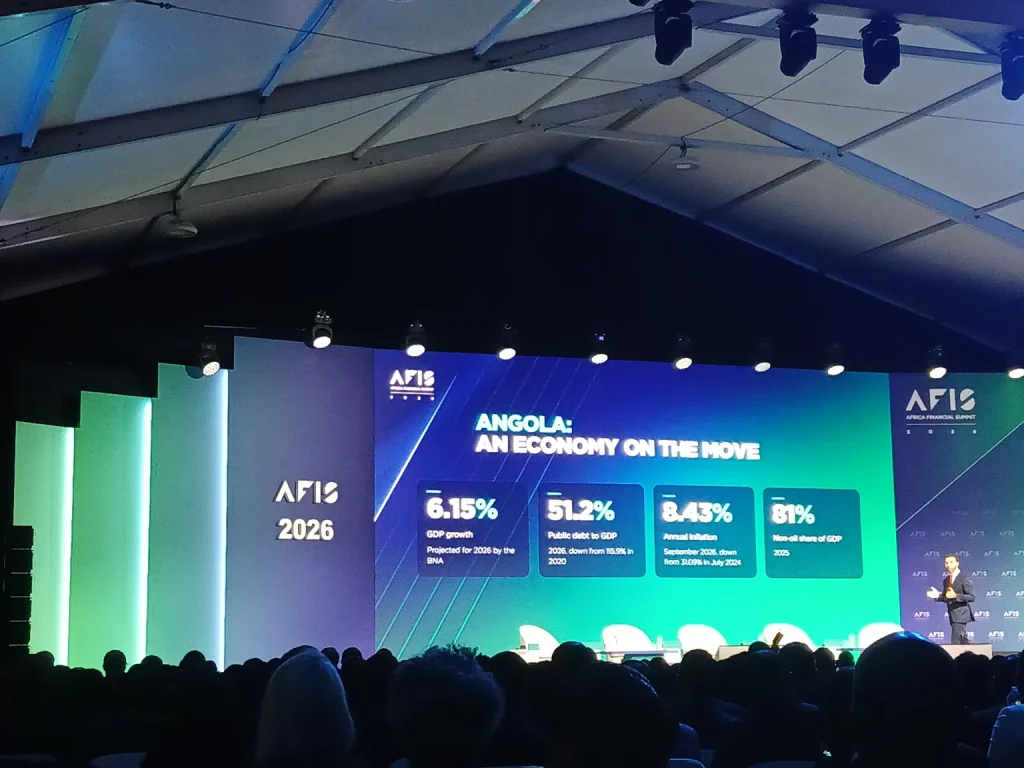
African financial leaders, policymakers and investors are gathering in Luanda, Angola, on November 3–4, 2026, for the sixth Africa Financial Summit (AFIS 2026), as pressure grows on the continent’s banking industry to convert its financial strength into meaningful economic development.
Held under the theme “Making Capital Count: Unlocking Growth Through African Finance,” the summit is focused on addressing a major contradiction in Africa’s financial sector: banks are generating substantial revenues and profits, yet millions of businesses continue to struggle to access affordable financing.
According to figures cited by the summit organisers, African banking revenues exceeded $100 billion in 2024, while the sector recorded an average return on equity of 19%. However, loans account for only about 30% of banking assets, highlighting the limited flow of financial resources into businesses and productive economic activities.
Organised by Jeune Afrique Media Group in partnership with the International Finance Corporation (IFC), and hosted by the Angolan government, AFIS 2026 is bringing together more than 1,250 financial executives, regulators and policymakers. Participants include 18 central bank governors and eight finance ministers.
Among the prominent attendees are Makhtar Diop, managing director of the IFC; Sidi Ould Tah, president of the African Development Bank Group; and Jeremy Awori, chief executive of Ecobank Group. Their participation reflects the importance of cooperation between financial institutions, governments and development organisations in addressing Africa’s financing challenges.
A major focus of the discussions is expanding access to credit for micro, small and medium-sized enterprises (MSMEs). These businesses are essential to employment and economic activity across Africa but frequently face high borrowing costs, limited collateral and difficulties meeting traditional banking requirements.
Agriculture, manufacturing, housing and infrastructure are also central to the summit’s agenda. Financing these sectors is critical to reducing dependence on commodity exports, strengthening local production and creating sustainable employment.
Another important issue is how African savings can be redirected towards domestic investment. Pension funds, insurance companies and sovereign wealth funds represent significant pools of capital that could support long-term infrastructure projects and business expansion if appropriate investment structures and risk-sharing mechanisms are developed.
The summit is also examining financial technology, artificial intelligence, digital banking and cross-border payment systems as tools for improving access to financial services. Stronger regional integration could help businesses operate across African markets while reducing transaction costs and barriers to international trade.
However, discussions alone will not resolve the continent’s financing challenges. Banks must develop lending models that recognise the realities of African businesses, while governments and regulators need to strengthen financial markets, improve transparency and reduce investment risks.
AFIS 2026 represents an important test of whether Africa’s financial institutions can move beyond profitability and deliver wider economic value. The real measure of success will be whether the capital discussed in Luanda reaches entrepreneurs, farmers, manufacturers and infrastructure developers.
For Africa, building a stronger banking industry is important, but ensuring that its financial resources support productive economic activity is even more critical.
Leave a Reply