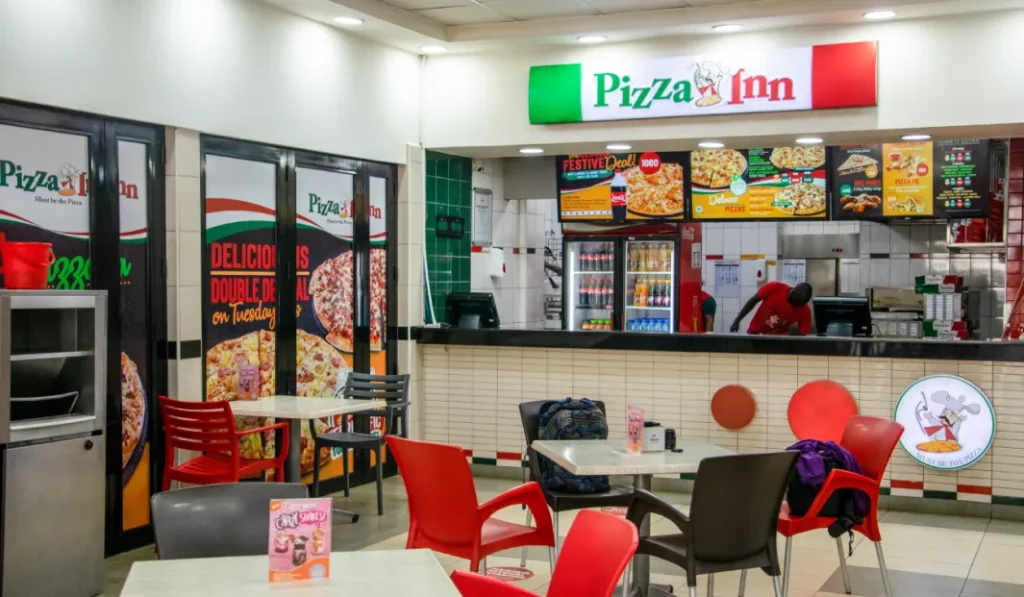
Zimbabwean fast-food group Simbisa Brands is strengthening its position in Kenya’s growing food delivery market after acquiring the remaining 25% stake in its delivery subsidiary, Kutuma Kenya, for approximately $664,000.
The transaction gives Simbisa full ownership of a business that has become increasingly important to its restaurant operations as more Kenyan consumers turn to online ordering and home delivery.
Simbisa, whose restaurant portfolio includes Pizza Inn, Chicken Inn, Galito’s, Creamy Inn and Bakers’ Inn, paid KES 85.8 million ($663,882) to acquire the minority shareholder’s interest in Kutuma Kenya. The transaction was reflected in the group’s financial statements for the year ended June 2026.
The acquisition increases Simbisa’s ownership from 75% to 100%, giving the group greater control over the company’s operations, investment decisions and future expansion plans. Global Nigeria News +1
The deal also reflects a broader change in the restaurant industry, where food delivery is becoming an important revenue channel rather than simply an additional service for customers who prefer eating at home.
For Simbisa, taking complete control of Kutuma is an opportunity to strengthen its digital distribution strategy and potentially build a delivery business that serves customers beyond its own restaurant brands.
Why Simbisa Is Betting on Kenya’s Delivery Market
The acquisition comes as delivery becomes a larger contributor to Simbisa’s Kenyan operations.
During the financial year ended June 2026, the group completed 3.23 million deliveries in Kenya, compared with 2.03 million in the previous financial year. This represents a 59% increase in delivery volumes.
More importantly, the value of goods sold through delivery increased to 27.4% of Simbisa’s Kenyan turnover, compared with 21.7% a year earlier.
The figures indicate that delivery is becoming an important part of how the company generates revenue in the country.
Interestingly, Kenya has become a more significant delivery market for Simbisa than its home market of Zimbabwe. Despite operating 352 outlets in Zimbabwe compared with 257 in Kenya, delivery accounted for just 5.1% of the group’s Zimbabwean turnover. Global Nigeria News +1
This difference suggests that Kenyan consumers are making greater use of digital ordering and home delivery services.
Simbisa is therefore positioning itself to benefit from changing consumer behaviour by investing in the infrastructure responsible for getting its products to customers.
The company has also indicated that it will continue investing in digital ordering and delivery operations where it expects attractive financial returns.
Kutuma Wants to Become More Than a Restaurant Delivery Service
Kutuma Kenya is not limited to delivering meals from Simbisa-owned restaurants. The company operates several services that could help it develop into a broader delivery and logistics marketplace.
Its operations include:
- Dial a Delivery: Handles food and grocery orders from Simbisa restaurant brands and other participating businesses.
- Yum: Connects customers with restaurants and grocery retailers, particularly in Nairobi.
- Swyft: Provides delivery and logistics services for businesses seeking last-mile distribution.
These platforms give Kutuma an opportunity to expand beyond its parent company’s restaurant portfolio and serve independent merchants.
The strategy could become particularly valuable for smaller restaurants, grocery stores and retailers that want to reach online customers without developing their own delivery infrastructure.
For Simbisa, owning Kutuma outright means it can make strategic decisions about expanding these services without negotiating with a minority shareholder.
It also gives the group an opportunity to integrate its restaurant operations more closely with ordering technology, delivery management and customer data.
Competing Against Established Delivery Platforms
Kutuma’s expansion will not happen without competition.
Kenya’s food delivery market already includes established players such as Glovo, Uber Eats and Bolt Food.
These platforms have built customer bases, merchant relationships and delivery networks that make it difficult for smaller competitors to gain traction.
However, Kutuma has an advantage that many independent delivery startups do not possess: an existing source of demand.
Pizza Inn, Chicken Inn, Galito’s and the other Simbisa brands already generate orders that require delivery. This gives Kutuma a foundation from which it can expand its services to third-party businesses.
By adding independent restaurants and retailers to its marketplace, the company could increase the number of orders handled by its delivery network.
Higher order volumes could improve rider utilisation, reduce the cost of individual deliveries and make the business more commercially sustainable.
The opportunity is particularly relevant following the exit of Jumia Food from Kenya in December 2023, which left room for other companies to compete for online food and grocery orders. Global Nigeria News +1
Nevertheless, attracting merchants is only one part of the challenge. Kutuma must also offer competitive delivery charges, reliable service, convenient ordering and an experience that encourages customers to return.
Kenya’s Growth Is Supporting the Investment
Simbisa’s decision also comes against the background of improving business performance in Kenya.
During the 2026 financial year, the company’s Kenyan revenue increased by 11%, while operating profit grew by 16%.
However, average customer spending declined by 3% in US dollar terms, reflecting pressure on household purchasing power and the company’s use of pricing and promotional strategies to attract customers.
Customer volumes increased by 14%, suggesting that higher transaction activity helped support revenue growth despite weaker average spending. Global Nigeria News +1
This makes delivery particularly important. Digital ordering allows restaurant operators to reach customers beyond the immediate surroundings of their physical outlets.
Instead of depending entirely on customers visiting restaurants, Simbisa can generate additional sales through online orders and home delivery.
Full ownership of Kutuma could therefore help the group improve its control over this distribution channel while creating opportunities to generate revenue from external merchants.
The Bigger Opportunity Is Digital Commerce
The acquisition highlights an important development in Africa’s restaurant and retail industries: companies are increasingly looking beyond physical outlets to control the platforms and logistics that connect them with customers.
For traditional restaurant operators, owning delivery infrastructure can provide greater control over customer relationships, ordering channels and service quality.
However, operating a successful delivery marketplace requires more than having restaurants and delivery riders. The platform must attract enough customers and merchants to generate consistent order volumes while keeping operational costs under control.
Kutuma will need to demonstrate that its services can compete effectively with established platforms while expanding beyond Simbisa’s own brands.
It must also balance the demands of serving its parent company’s restaurants with the commercial requirements of independent businesses.
Simbisa Brands’ $663,882 acquisition of the remaining stake in Kutuma Kenya is a relatively modest transaction financially, but it carries strategic importance for the group’s ambitions in digital commerce.
With Kenyan delivery orders reaching 3.23 million in the 2026 financial year and delivery contributing 27.4% of local turnover, the company has a strong incentive to strengthen its control over this growing business.
The next challenge is transforming Kutuma from an internal restaurant delivery operation into a competitive marketplace serving independent restaurants, grocery stores and other retailers.
Ultimately, Simbisa is betting that the future of restaurant growth will depend not only on how many outlets a company operates, but also on how effectively it delivers products to customers.
Whether that investment succeeds will depend on Kutuma’s ability to attract third-party merchants, increase delivery volumes and compete in Kenya’s increasingly crowded digital commerce market.
Sources and references
Leave a Reply