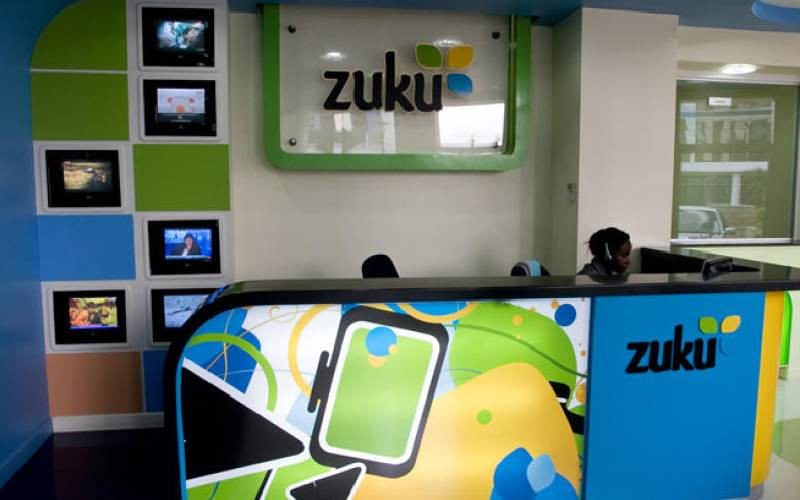
Zuku, one of Kenya’s established home internet providers, is beginning to regain customers through cheaper subscriptions and faster internet speeds. However, the improvement in its subscriber numbers has yet to translate into financial recovery. Nearly a year after telecommunications group Axian Telecom acquired its parent company, Wananchi Group, the business continues to struggle with falling revenue and mounting losses.
The development highlights a difficult challenge for Axian: rebuilding a telecommunications brand that once enjoyed a strong position in Kenya’s broadband market while competing against better-positioned rivals. Although lower prices are helping Zuku attract customers, the company must find a way to turn that growth into sustainable revenue.
Zuku’s Strategy to Win Back Customers
Zuku built its reputation as one of Kenya’s early home fibre internet providers, particularly in Nairobi, where demand for reliable household broadband has increased alongside the growth of digital businesses, remote working and online entertainment.
However, its competitive position weakened as Safaricom and Jamii Telecommunications expanded their fibre networks and attracted customers with improved connectivity and wider coverage. Service reliability concerns and customer dissatisfaction also affected Zuku’s reputation.
The arrival of Axian created expectations of fresh investment, improved infrastructure and a renewed commercial strategy.
Rather than relying exclusively on its existing brand recognition, Zuku has begun competing more aggressively on affordability and internet speeds.
In May 2026, the company doubled speeds across its fibre packages without increasing monthly subscription prices. Its entry-level package increased from 15 megabits per second (Mbps) to 30 Mbps at KES 2,799 monthly. Other packages also received substantial speed improvements.
Three months later, Zuku reduced subscription prices on several packages, strengthening its position in a market where affordability remains an important consideration for households.
The strategy appears to be producing results. According to figures from Kenya’s Communications Authority, Zuku’s fixed-internet subscriptions increased by 10.4% in the first half of 2026.
This represents a meaningful improvement following a difficult period in which Wananchi lost more than 24,000 internet and pay-TV subscriptions in the three months leading to September 2025.
Customer Growth Has Not Solved the Financial Problem
Despite the improvement in subscriptions, Wananchi’s financial performance remains under pressure.
The company recorded approximately $11.5 million in revenue during the third quarter of 2026, alongside a $2 million loss. Although the quarterly loss narrowed from $3.9 million in the second quarter, the business accumulated approximately $8.1 million in losses between January and September.
Revenue also declined by roughly one-fifth between the first and third quarters, demonstrating that attracting additional subscribers has not yet produced the financial improvement Axian needs.
Several factors help explain this disconnect.
First, reducing subscription prices can attract customers but also limit the amount of revenue generated per subscriber. When a telecommunications provider offers faster speeds at lower prices, it must attract enough additional customers to compensate for the reduced income from individual subscriptions.
Second, maintaining a fibre network requires substantial expenditure. Network capacity, bandwidth, equipment maintenance, staff costs and depreciation continue to affect operating performance regardless of how quickly subscriptions increase.
Currency movements across the markets where Wananchi operates have also affected the dollar value of its revenue.
The company’s financial difficulties therefore extend beyond customer acquisition. Its challenge is to improve operational efficiency while maintaining service quality and competitive pricing.
Axian’s $69.4 Million Acquisition Faces a Critical Test
Axian Telecom completed its acquisition of approximately 99.63% of Wananchi Group on October 30, 2025, for an initial consideration of $69.4 million.
The transaction gave Axian control of Zuku and Simbanet, providing access to residential broadband, enterprise connectivity, wholesale fibre capacity and digital television operations across several African markets.
However, the acquisition came with significant financial challenges. Wananchi’s liabilities exceeded its assets by approximately $48.6 million when Axian assumed control.
For Axian, the investment represented an opportunity to strengthen its presence in East Africa’s telecommunications market and expand its broadband infrastructure business.
Its wider operations remain considerably larger. The group reported third-quarter revenue of $525.5 million, up 17% year-on-year. Wananchi contributed $11.5 million, representing a relatively small portion of the group’s overall business.
This suggests Axian has the financial scale and regional experience to support the turnaround. Nevertheless, the Zuku investment must eventually demonstrate that it can generate returns rather than continuously require additional resources.
Competition Is Becoming More Difficult
Kenya’s broadband market is expanding, but competition is becoming increasingly intense.
According to the Communications Authority, Safaricom held approximately 36.1% of Kenya’s fixed-internet market as of June 2026, with more than one million subscriptions. Jamii Telecommunications remained second, while Wananchi accounted for approximately 10.4%.
This competitive environment creates pressure on Zuku to improve network coverage, reliability and affordability simultaneously.
The company’s television business faces additional difficulties. Its satellite television subscriptions declined by 16.4% in the year to June 2026, as competitors such as MultiChoice and Azam gained customers.
The wider shift towards streaming platforms and internet-based entertainment is also changing consumer preferences. Households increasingly evaluate internet and television subscriptions together, making reliable broadband an important part of the entertainment market.
For Zuku, this creates an opportunity to strengthen its fibre business while reconsidering the long-term role of traditional pay television.
What Zuku Must Get Right Next
Zuku’s recovery will depend on whether Axian can translate subscriber growth into stronger financial performance.
The company needs to prioritise three areas: improving network reliability, controlling operating costs and increasing revenue per customer without undermining affordability.
Investment in fibre infrastructure will also be important. In July 2026, Axian and Wananchi’s Kenyan operations signed financing arrangements involving the European Bank for Reconstruction and Development to support fibre modernisation and expansion.
Such investments could improve service quality and help Zuku compete more effectively, particularly in underserved residential markets.
However, infrastructure spending takes time to deliver financial returns. Axian must therefore balance long-term expansion with the immediate need to reduce losses.
Conclusion
Zuku’s recent subscriber growth suggests that its affordability strategy is gaining traction. But winning customers is only one part of rebuilding a telecommunications business.
For Axian, the bigger challenge is converting competitive pricing, improved internet speeds and infrastructure investment into consistent revenue growth and profitability.
The coming quarters will reveal whether Zuku’s turnaround can move beyond customer acquisition and become a sustainable business recovery. For now, the company has made progress in winning back subscribers, but its financial transformation remains unfinished.
Leave a Reply